TikTok Shop and Instagram Now Have Virtual Try-On: What Fashion Brands Should Do
Quick answer
Fashion discovery has moved into short video and live selling over the past couple of years. Try-on is following it there. TikTok Shop and Instagram have each been building AR and AI preview features directly into content, not bolted onto a separate product page, and that changes what a shopper expects before they even reach your site.
What TikTok Shop and Instagram have actually built
Neither platform has announced one single, finished try-on product. Both have been rolling features out in stages, and the coverage of each stage is worth separating from marketing language.
- TikTok Shop: reporting through 2026 describes an AR try-on feature expanding for clothing, beauty, and home categories, letting a shopper preview an item through their phone camera. Coverage of the rollout centers on the US and Southeast Asian markets rather than a worldwide launch.
- Instagram: as of April 2026, eligible creators can tag products from a connected brand catalog directly inside Reels, pulling shopping into the video itself instead of a separate tab. Instagram and TikTok have both been reported piloting AR try-on inside content, one more step past product tagging alone.
- Live selling: fashion and beauty brands running live shopping events on these platforms report some of the highest conversion rates in social commerce, and industry write-ups on live shopping consistently describe lower return rates than standard online fashion orders, since a viewer sees the garment demonstrated before they buy rather than guessing from a static photo.
Why try-on works differently inside short video and live selling
A traditional product page shows one photo, maybe a size chart, and asks the shopper to imagine the rest. Video and live selling remove that gap in a different way: a viewer watches the garment move on a real body before deciding whether to look closer. Try-on inside that same feed is a small step from there, not a leap. Tap the item, see it on your own body, keep scrolling or buy.
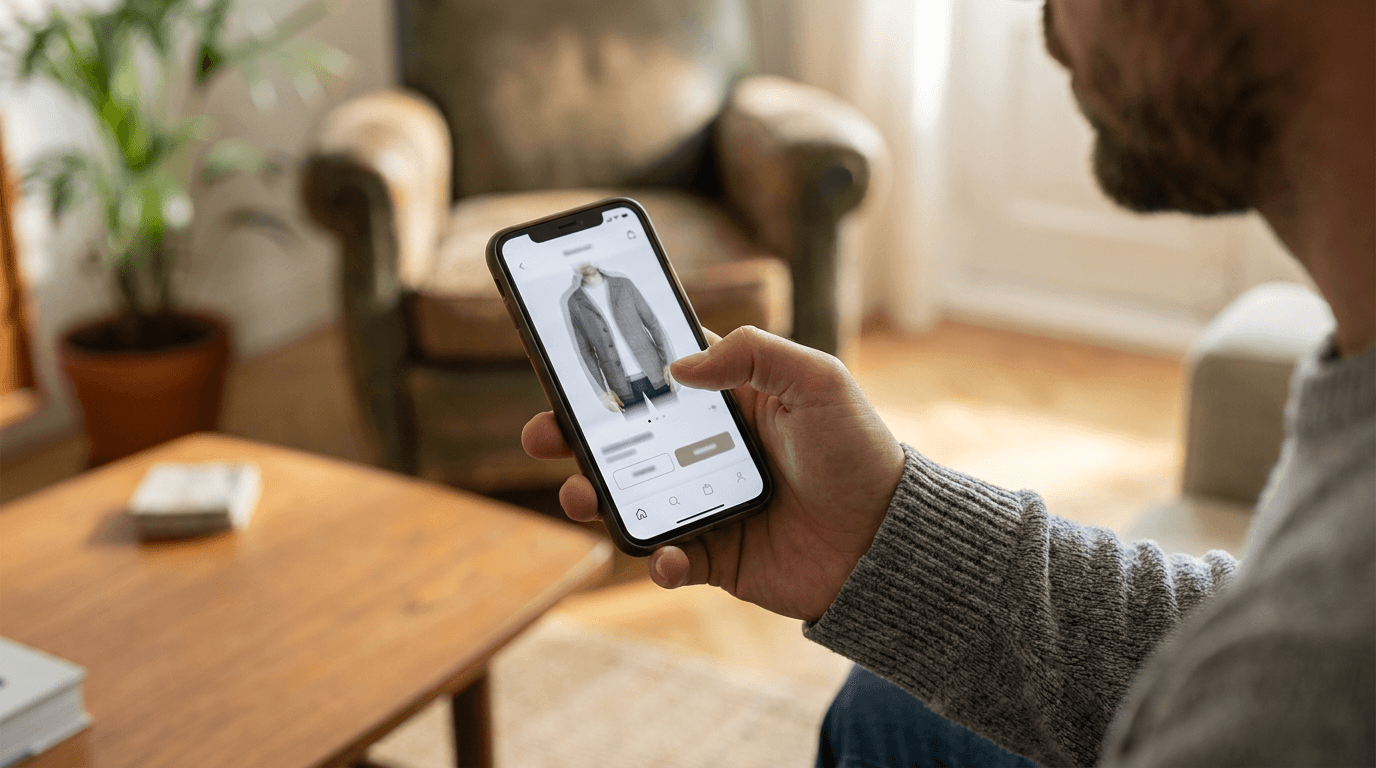
This matters for fit confidence specifically, the same problem covered in how to reduce online fashion returns. A shopper scrolling a feed makes a buying decision in seconds. Anything that closes the gap between seeing a garment and knowing how it will actually look on them, whether that is a creator's demo, a live host, or an AR preview, works in the same direction: fewer wrong-fit orders reaching checkout in the first place.
What this means if you sell fashion online
None of this requires action to keep your store running today. It does raise the bar a shopper measures every brand against, on and off these platforms.
- Shoppers now expect a preview, not just a photo. Someone who has tapped a try-on button inside TikTok or watched a live-selling host demo a fit will notice its absence on a product page that only has a flat-lay image.
- Catalog approval sits with the platform, not you. Whether your products are even eligible for a platform's try-on or shoppable-video tools depends on your catalog meeting that platform's own requirements, a decision you do not fully control.
- The feature stays inside that app. A shopper who tries on your product through TikTok Shop or Instagram still has to leave, land on your actual store, and complete the purchase there. The preview itself never reaches your product page, your paid ads, or a customer in a physical store.
- Platform features move fast, in both directions. A tool that expands to a new market this year can just as easily narrow its scope next year. Building a customer experience entirely around one platform's roadmap is a real dependency to carry.
Should you rely on the platform's try-on, or add your own?
These are not competing choices. A shopper discovering your product on TikTok or Instagram and getting a preview there is a good thing for you, not a threat. The gap sits everywhere that platform feature does not reach: your own product pages, your ads, your email campaigns, and, if you sell in person, the shop floor itself.
That is the gap Corlen closes. It adds virtual try-on directly to your own Shopify product pages, so a shopper who lands on your store after seeing you on social media gets the same instant preview there, not just inside someone else's app. The same engine runs an in-store kiosk and a developer API for a custom flow, so the experience does not depend on which social platform happened to approve your catalog for its own try-on tools that month.
Getting started
You do not need to wait for a platform's roadmap to give shoppers this. If you are comparing options for your own store, how to choose a virtual try-on app covers what actually matters beyond a feature list. Or see it directly: try Corlen on your own photo in a few seconds, no account needed.
Frequently asked questions
Does TikTok Shop have virtual try-on?
Reporting through 2026 describes TikTok Shop expanding an AR try-on feature so shoppers can preview clothing, beauty products, and home items through their phone camera, with apparel as one of the categories getting the most attention. Coverage of the rollout points to the US and Southeast Asian markets first, not a global launch.
Can shoppers try on clothes inside Instagram?
Instagram has been building toward it rather than shipping one single try-on button. As of April 2026, eligible creators can tag products from a connected brand catalog directly inside Reels, and Instagram and TikTok have both been reported piloting AR try-on inside content itself, not just on a separate product page.
Do returns really drop with livestream and social shopping?
Industry reporting on live shopping consistently points the same direction: seeing a garment demonstrated in real time, on a real body, before ordering, cuts down on the guesswork that causes a lot of fashion returns. The exact numbers vary by report and platform, but the mechanism is the same one that makes any accurate preview work: fewer surprises after the box arrives.
Should a fashion brand rely on TikTok's or Instagram's built-in try-on instead of building its own?
Not exclusively. A platform's try-on feature only reaches the shopper while they are inside that platform's app, only works for products the platform has approved and connected through its own catalog tools, and can change scope or availability without notice. Your product pages, ads, email campaigns, and any physical store still need their own answer to the same question.
How does Corlen fit into a social commerce strategy?
Corlen puts a try-on button directly on your Shopify product pages, so a shopper who discovers you through a TikTok or Instagram video can land on your actual store and get the same instant preview there, on your terms, regardless of which platform features happen to be live that month.
Ready to add real try-on to your store?
Install Corlen on Shopify in minutes, or build it into your own platform with the developer API.
Similar posts
Real-Time Virtual Try-On: What It Is and Whether Your Store Needs It Yet
Real-time virtual try-on renders clothing on a shopper's live camera feed instead of one photo. Here is what shipped in 2026, and what it means for your store.
Read articleTrendsDoes Zalando Have Virtual Try-On? Inside Its 40% Return Drop
Zalando's virtual fitting room cut returns 40% in a Levi's pilot and has now reached 1.5 million shoppers. Here is what the real numbers show.
Read articleTrendsDoes Snapchat Have Virtual Try-On for Clothes?
Snapchat has run AR try-on since 2021: Camera Kit shoe lenses, in-store AR Mirrors. Here is what it covers and how it differs from AI try-on.
Read articleSee it on your own photo
Corlen shows your customers how any garment looks on their own body, in seconds. Try it free, no account needed.
Try Corlen free