Best Virtual Try-On App for Shopify: How to Choose in 2026

Quick answer
Virtual try-on has gone from novelty to a real category, with several serious options now available for Shopify stores. That is good for merchants, and it also means picking one takes a bit more care than it did a year ago. Here is what actually matters when comparing them.
What actually matters when comparing virtual try-on apps
- Fit realism. Does the app just paste a garment onto a photo, or does it account for the shopper's own body proportions? A size label means different things across brands, so a try-on that reflects the shopper's actual build is far more useful than one that assumes a perfect fit every time.
- Privacy handling. A customer photo is sensitive. Check whether the app runs face recognition, whether photos are stored or shared, and whether there is an automatic deletion policy. This should be stated plainly, not buried.
- Installation effort. The best options install from the Shopify App Store and are added in the theme editor, with no code and no developer time. If a tool needs custom development to add a button to your product pages, that is real hidden cost.
- Generation speed and quality. A slow or low-quality result loses the shopper's attention. Look for a live demo you can test on your own photo before committing, not just marketing screenshots.
- Where else it reaches. If you also sell in a physical store, or want to build your own integration later, it is worth knowing whether the provider offers that beyond just a Shopify app.
How the main options compare
Several virtual try-on providers are active in the Shopify ecosystem as of 2026, beyond the two most commonly named. Here is what each is publicly known for, based on their own listings and sites:
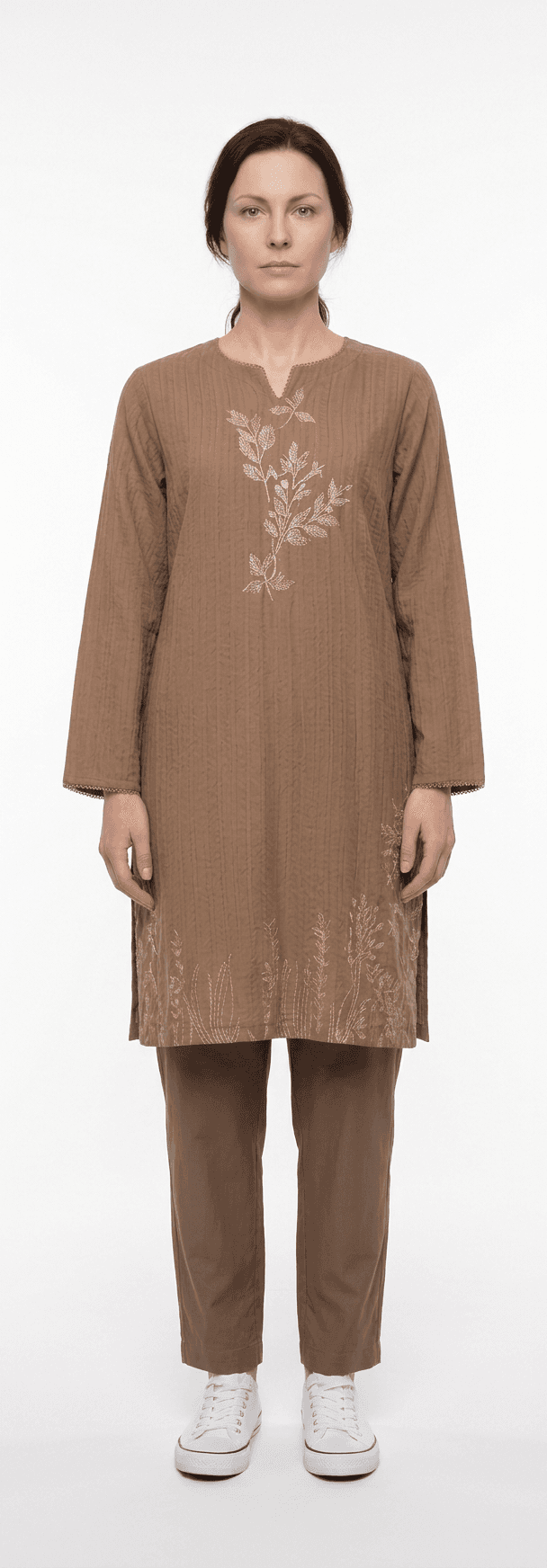
- Genlook installs as a Shopify app embed and focuses on high-fidelity rendering that preserves fabric texture and drape, plus an AI studio feature for generating marketing images and integrations like Klaviyo.
- Antla generates try-ons from a single shopper photo and is built around a share-for-discount loop, where a shopper gets a coupon for posting their try-on result, turning it into user-generated content. It integrates with Klaviyo, Attentive, and Postscript.
- Photta is a widget you embed with a single script tag, covering clothing, eyewear, and jewelry from one platform, and runs on Shopify, WooCommerce, BigCommerce, and several other platforms, not just Shopify. For a detailed head-to-head, see Corlen vs Photta.
- Garu pairs AI try-on with a size guide, aiming directly at the same fit-uncertainty problem this guide opened with. If size guidance specifically is your main gap, it's a closer fit than a general try-on tool.
- WEARFITS is a specialist rather than a general option: it focuses specifically on footwear, converting a shoe's product photos into a 3D/AR try-on a shopper can view through their phone camera. None of the general clothing options above cover footwear, so a store with a real shoe catalog needs this or something like it as a separate line item.
- Corlen installs the same way, with no custom code, and differentiates on body-size aware fitting (the shopper indicates their own build, not just the garment size), a strict privacy model with no face recognition and automatic photo deletion, and reach beyond the online store: the same engine also runs an in-store kiosk and a developer API, so it is not limited to Shopify alone.
This list will keep changing as the category moves fast; always check a provider's current site directly before deciding, feature sets and pricing shift often.
The real question: does it reduce your returns?
Whichever app you pick, the reason to add virtual try-on at all is to close the fit gap that drives clothing returns. For the underlying case, see how to reduce online fashion returns. If the app you are evaluating cannot show you, on your own photo, a result that actually reflects how a garment would fit, it is not doing the job.
You can test Corlen directly: try it on your own photo, no account needed, or see the Shopify integration in detail. If your store sells high-end pieces, virtual try-on for luxury fashion covers the specific fabric and presentation requirements that matter at that tier.
Frequently asked questions
What should I look for in a virtual try-on app?
Fit realism (does it account for the shopper's own body, not just the garment's stated size), privacy handling of customer photos, how easily it installs on your store, generation speed, and where else it can run beyond the online store, such as an in-store kiosk.
Is virtual try-on worth it for a small Shopify store?
It is most valuable for stores where fit uncertainty is a real return driver, which is most clothing stores. Since a good one installs from the Shopify App Store and is added in the theme editor with no custom code, the setup cost is low relative to the return-rate problem it addresses.
How much does a virtual try-on app cost?
Pricing varies by provider and typically scales with usage. Corlen's plans start around 20 USD per month; always check the current pricing page of any app you are evaluating since this changes.
Do virtual try-on apps store customer photos?
This varies by provider and is worth checking directly in each app's privacy policy before installing. Corlen never uses photos for face recognition, never shares them, and deletes them automatically on a fixed schedule.
Ready to add real try-on to your store?
Install Corlen on Shopify in minutes, or build it into your own platform with the developer API.
Similar posts
WooCommerce Virtual Try-On Plugins Compared (2026)
Compare WooCommerce virtual try-on plugins by pricing model, who pays for AI generation, and privacy. Six real options, with what each one costs you.
Read articleComparisonsVirtual Try-On API Comparison for Developers (2026)
Comparing virtual try-on APIs for developers: FASHN, fal.ai, Replicate, and Corlen on real pricing, garment support, and privacy, checked directly with each provider.
Read articleComparisonsBest Antla Alternatives for Shopify Stores in 2026
Comparing the best Antla alternatives for Shopify: Corlen, Genlook, Photta, and more, on pricing, fit accuracy, privacy, and reach beyond your storefront.
Read articleSee it on your own photo
Corlen shows your customers how any garment looks on their own body, in seconds. Try it free, no account needed.
Try Corlen free