AI Fashion Models vs Virtual Try-On: What Is the Real Difference?
Quick answer
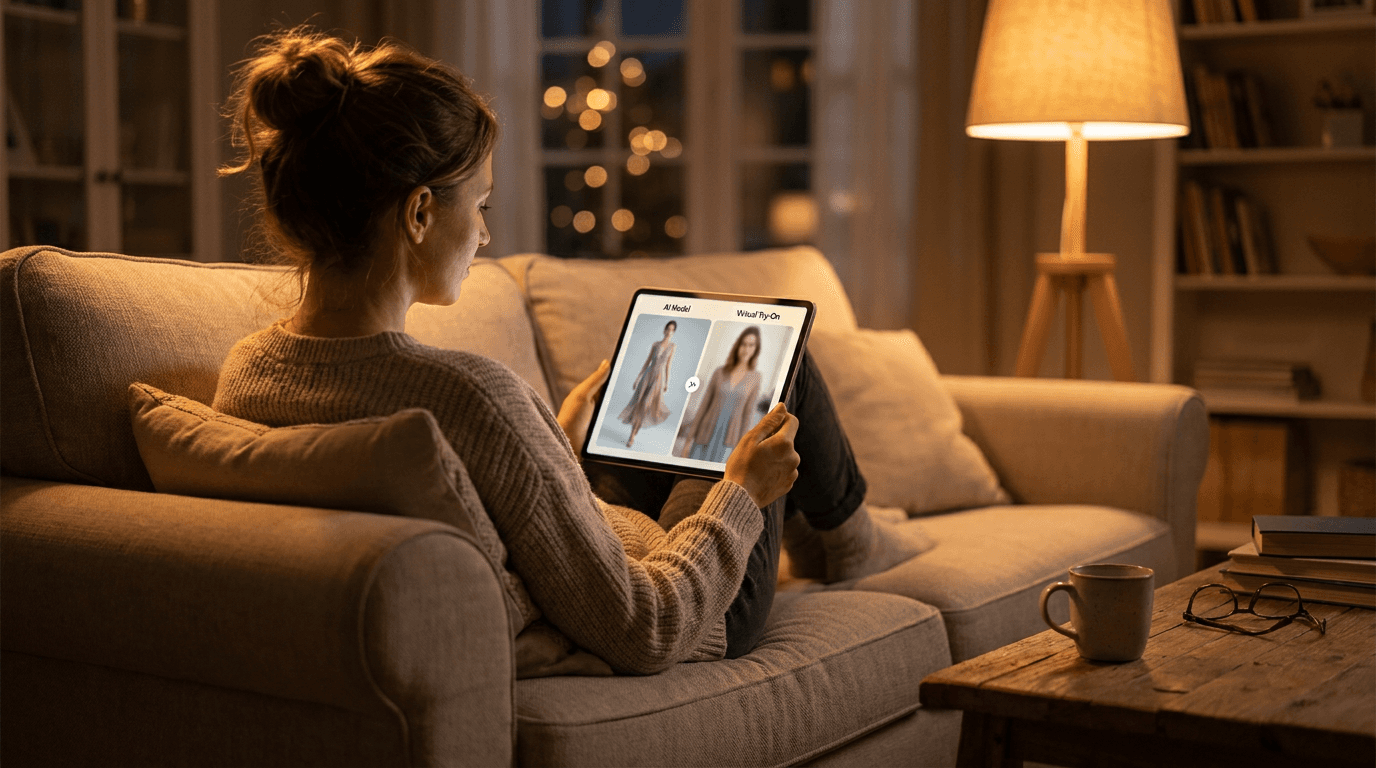
The confusion between the two is understandable. Both produce a photorealistic image of a person in clothing, and both run on similar image generation models. But the subject of the image is a different question entirely, and it is the one shoppers seem to actually care about.
What are AI fashion models, and why are brands using them?
An AI fashion model is a fully synthetic person, generated by a model rather than photographed. No individual exists behind the face. Brands adopted the approach for reasons that are easy to state plainly: it is faster than booking a studio, a shoot, hair, makeup, and a crew, and it lets a marketing team produce more images at a lower cost per image.
- Levi's announced in March 2023 that it would use AI-generated models to supplement its human ones, then walked the plan back after criticism, stating it was not scaling back real photo shoots.
- Mango ran a limited-edition teen clothing campaign called Sunset Dream, billed as its first campaign generated entirely with AI, and drew criticism over false advertising and job displacement.
- H&M disclosed plans to build digital twins of roughly 30 of its own signed models, with those models compensated for the license, and still faced calls for boycotts from photographers.
- Valentino posted an AI-generated, clearly labeled video for its DeVain handbag in December 2025 and met the same reaction.
- Gucci used AI-generated imagery for its Milan Fashion Week PRIMAVERA campaign in 2026, which commentators called out as inconsistent with a brand built on Italian craftsmanship.
Why do AI fashion models keep causing backlash?
Every case above followed roughly the same arc: a brand ships an AI-generated campaign, and the response is not about image quality. It is about what got removed from the process. Coverage of these campaigns keeps returning to two concerns: real models losing paid work, and shoppers feeling misled about who they are actually looking at.
A Vogue Business and GQ survey of 250 readers in April 2026 put a number on that sentiment. Only 24 percent said AI-generated campaign imagery matched the value of human-made content. The more useful detail sits underneath that figure: people were less bothered by imperfect polish than by the absence of a real person on the other side of the image.
How is virtual try-on different from an AI fashion model?
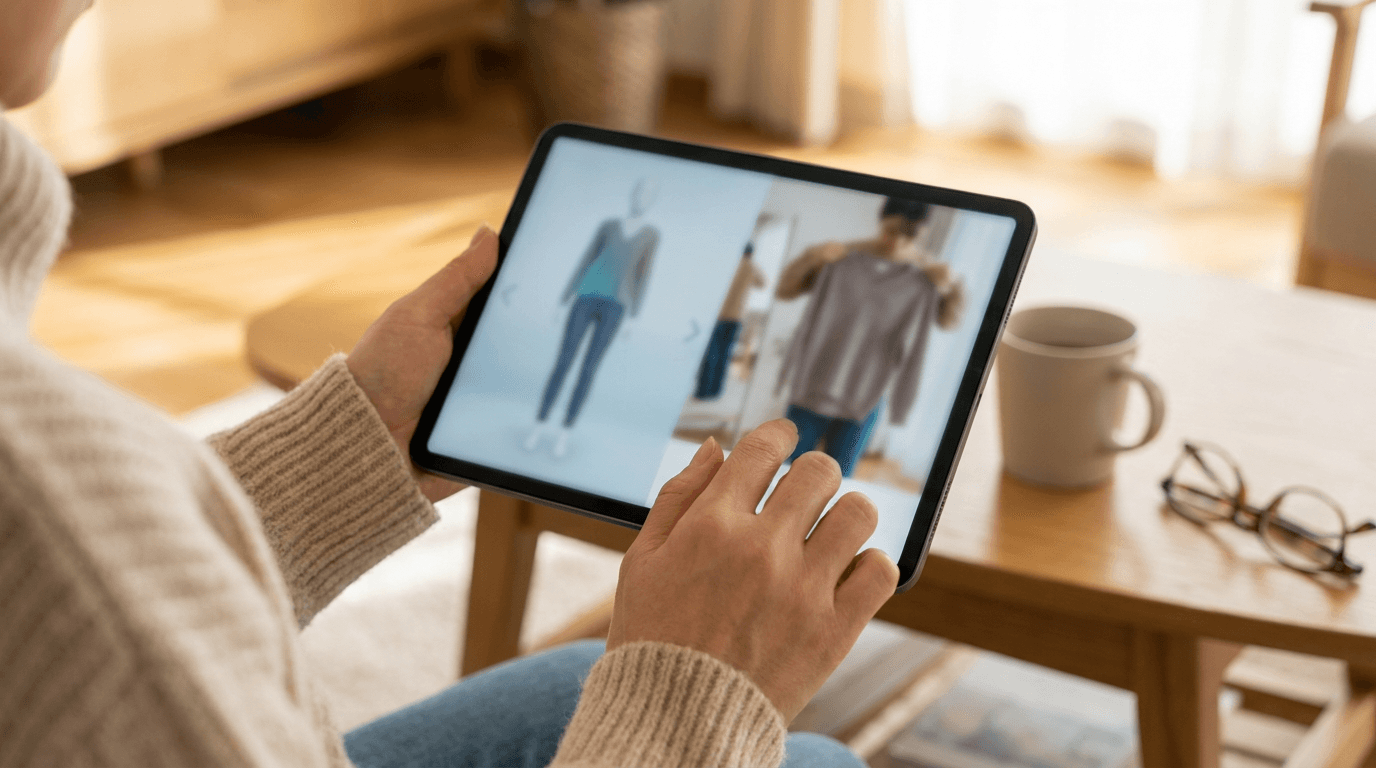
Virtual try-on inverts the entire premise. Instead of generating a fictional person to sell a garment, it starts with a real shopper's own photo and renders that same person wearing an item from a store's catalog. Nobody is replaced. Nothing about the shopper is invented. The garment changes; the person does not.
- Subject: an AI fashion model invents the person in the photo. Virtual try-on keeps the actual shopper as the subject.
- Purpose: an AI fashion model produces a campaign image meant for many viewers. A virtual try-on result is generated for one shopper, about one purchase decision.
- Who it replaces: an AI fashion model stands in for a paid, credited human model. Virtual try-on does not replace a person; it replaces the shopper's own guess about fit and look.
- What backlash targets: criticism of AI fashion models centers on job loss and authenticity. Virtual try-on has a different set of open questions, mainly around photo privacy and result accuracy, covered in is virtual try-on safe and is virtual try-on accurate.
Why does the difference matter to a shopper?
Trust in an image comes down to a simple question: is there a real person behind this, and whose interest does the image serve? An AI fashion model exists to make a brand's marketing cheaper to produce. A virtual try-on result exists to answer a shopper's own question about how a specific item will look on them, using their own likeness, before they spend money.
That distinction does not make virtual try-on exempt from disclosure. Under the EU AI Act, a photorealistic image built to resemble a real person triggers the same transparency obligation whether that person is invented or is the actual shopper looking at their own screen. The rule and what it requires from a store are covered in does virtual try-on need an AI-generated label.
Where does Corlen sit in this?
Corlen only ever generates from the shopper's own photo. There is no synthetic model in the product, and no campaign use case where a customer's likeness gets replaced with an invented one. A shopper uploads a photo of themselves, picks a garment from the store's catalog, and sees a rendered result of themselves in that garment. That is closer in spirit to a fitting room mirror than to a photo shoot.
It runs on the same underlying image model family, Gemini 3 Pro Image, also called Nano Banana Pro, discussed in more depth in what AI shopping search means for your store. The difference is entirely in what the tool is pointed at: a real customer's own fit question, installed on a store's Shopify or WooCommerce product page, or through the developer API for a custom build.
See it directly: try Corlen on your own photo, no account needed for a first result.
Frequently asked questions
What is an AI fashion model?
An AI fashion model is a computer generated person, built to look photorealistic, used to model clothing in place of a human. No real person exists behind the image. Brands including Levi's, Mango, and Gucci have all published campaigns built this way.
Is virtual try-on the same thing as an AI fashion model?
No. An AI fashion model replaces a real person with a fictional one. Virtual try-on starts from an actual shopper's own photo and renders a garment onto it, so the person in the image is real. The technology behind both can overlap, but the subject of the image does not.
Which fashion brands have used AI-generated models?
Levi's announced AI-generated models in 2023 before walking the plan back under criticism. Mango used AI models for a teen clothing line called Sunset Dream. H&M planned digital twins of its own signed models. Valentino posted an AI-generated video in December 2025. Gucci's Milan Fashion Week campaign in 2026 used AI imagery and drew public criticism.
Do shoppers trust AI-generated fashion imagery?
Not much, so far. A Vogue Business and GQ survey of 250 readers in April 2026 found that only 24 percent believed AI-generated campaign imagery matched the value of human-made content. Coverage of the backlash keeps landing on the same point: shoppers respond to whether a real person is behind an image, not to how polished the image looks.
Does Corlen use AI-generated models?
No. Corlen generates a result from the shopper's own photo, not a synthetic person. The output shows the actual customer wearing the actual garment, which is a different use of the same underlying image technology than an invented model in a marketing campaign.
Ready to add real try-on to your store?
Install Corlen on Shopify in minutes, or build it into your own platform with the developer API.
Similar posts
Real-Time Virtual Try-On: What It Is and Whether Your Store Needs It Yet
Real-time virtual try-on renders clothing on a shopper's live camera feed instead of one photo. Here is what shipped in 2026, and what it means for your store.
Read articleTrendsDoes Zalando Have Virtual Try-On? Inside Its 40% Return Drop
Zalando's virtual fitting room cut returns 40% in a Levi's pilot and has now reached 1.5 million shoppers. Here is what the real numbers show.
Read articleTrendsDoes Snapchat Have Virtual Try-On for Clothes?
Snapchat has run AR try-on since 2021: Camera Kit shoe lenses, in-store AR Mirrors. Here is what it covers and how it differs from AI try-on.
Read articleSee it on your own photo
Corlen shows your customers how any garment looks on their own body, in seconds. Try it free, no account needed.
Try Corlen free