Is Virtual Try-On Safe? 5 Things to Check Before You Upload a Photo

Quick answer
A virtual try-on tool asks for something a normal product page never does: a photo of you. That is a reasonable thing to pause on before uploading. Safety here comes down to the specific company behind the tool and how they chose to handle that photo afterward.
What happens to your photo when you try on clothing virtually?
Once you submit a photo, one of a few things happens to it, and the differences matter more than most shoppers realize.
- It is processed and discarded. The photo is used once to generate the try-on image, then removed. Nothing persists after the request finishes.
- It is stored temporarily. The photo sits in storage for a set window, often to let a customer come back and review results, then deletes automatically.
- It is stored indefinitely. Some tools keep uploaded photos with no stated deletion timeline, sometimes to improve their own models.
- It is analyzed for biometric data. Beyond just being stored, the photo may be scanned for facial landmarks or measurements, which is a legally distinct category of data in several jurisdictions.
A privacy policy that does not clearly state which of these happens is itself useful information. A specific retention window, stated in plain language, is a sign the company has actually thought about this question rather than leaving it vague.
Does virtual try-on use biometric data?
Sometimes. The Illinois Biometric Information Privacy Act (BIPA) requires written consent before a business collects biometric identifiers such as facial geometry, and sets statutory damages of $1,000 per negligent violation or $5,000 per willful violation, plus attorneys' fees. Retailers running facial-recognition try-on features for eyewear and makeup, where the tool maps a face to place glasses or a lip color accurately, have faced lawsuits under this law and similar state statutes. For a deeper look at the EU side of this question, including whether a try-on photo qualifies as special category biometric data under GDPR, see GDPR virtual try-on compliance.
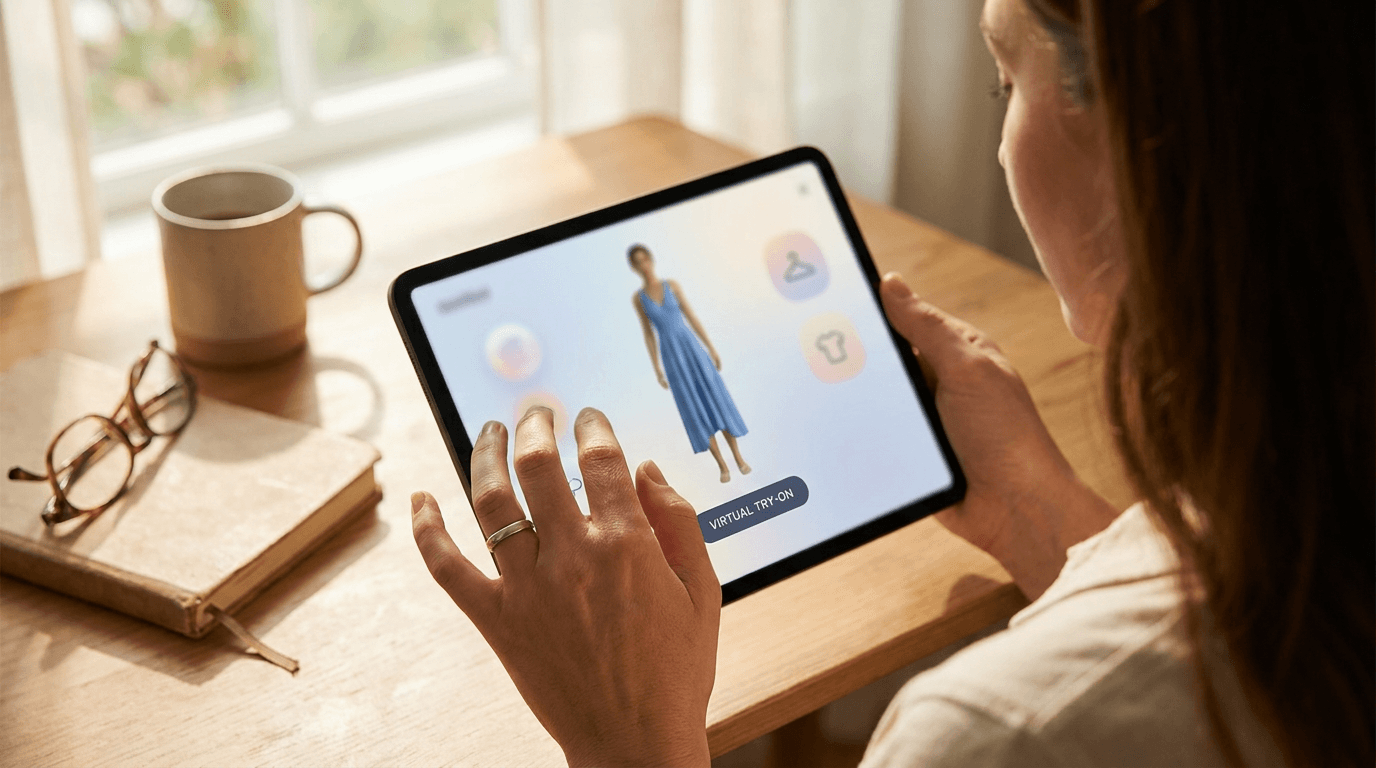
This is where category matters. Not every virtual try-on tool needs to know anything about your face.
Why clothing try-on is a different privacy question than eyewear or makeup
Eyewear and makeup try-on need to locate your face precisely: where your eyes sit, the shape of your lips, the bridge of your nose, so a frame or a lip color lines up correctly. That is facial landmark detection, and it is what makes those tools a biometric-data question under laws like BIPA.
Clothing try-on works differently. The task is rendering a garment onto a body in a photo, matching pose, proportions, and lighting, not identifying who the face belongs to or mapping its geometry. A tool built for clothing does not need facial recognition to do its job at all, which means a well-built one simply will not run it. A tool's own privacy policy should say plainly whether it detects or stores facial geometry, instead of leaving you to assume it from the garment category alone.
What to check before you upload a photo
- Read the retention window. Look for a specific number, not vague language like "as needed." Hours is meaningfully different from indefinitely.
- Look for a face recognition statement. A privacy policy that plainly states it does not run facial recognition or biometric analysis is telling you something concrete.
- Check who else sees the photo. Some tools share the photo with the store itself, others process it without the merchant ever seeing it.
- Look for a delete option. A visible way to remove your own photo before any automatic deletion window is a sign of a tool built with this question in mind from the start.
How Corlen handles your photo
Corlen's own privacy notice states this plainly rather than leaving it vague. On a Shopify store's product page, a photo uploaded to the Try It On button exists only in memory for the single request that generates your preview: it is never written to a database or file storage, never logged, and never kept afterward. On an in-store kiosk, the photo is deleted automatically within 2 hours, or immediately if you tap Delete My Photos. Corlen never runs face recognition or biometric analysis on a photo, and never shares it with the store owner.
See the full flow yourself: try Corlen on your own photo and watch what happens to it, or read the complete policy on the privacy page. If you are also weighing whether the try-on result itself can be trusted, is virtual try-on accurate covers the quality side of that question, separate from what happens to your photo afterward. For parents considering try-on for their children, virtual try-on for kids clothing covers the extra privacy safeguards that matter when minors are involved. For questions about who owns the generated image itself, see AI virtual try-on image copyright and ownership.
Frequently asked questions
Is it safe to upload my photo to a virtual try-on tool?
It depends on which tool you're using, since privacy practices vary a lot between providers. Before uploading, check how long the photo is kept, whether it is shared with the store, and whether the tool runs facial recognition. Some tools never store the photo at all, others keep it for hours or longer.
Does virtual try-on collect biometric data?
Some do and some do not. Tools built for eyewear or makeup often map facial landmarks to place a product on your face, which counts as biometric data under laws like the Illinois Biometric Information Privacy Act. Tools built for clothing, like Corlen, render a garment onto your body in a photo without ever detecting or storing facial geometry.
What is BIPA and why does it come up with virtual try-on?
The Illinois Biometric Information Privacy Act requires written consent before a business collects biometric identifiers such as facial geometry, and sets statutory damages of $1,000 per negligent violation or $5,000 per willful violation plus attorneys' fees. Retailers using facial-recognition try-on features for eyewear and makeup have faced lawsuits under this law.
How long do virtual try-on tools keep your photo?
This varies widely by provider, from no storage at all to retention measured in hours or longer. Corlen never stores a photo uploaded through a Shopify store's try-on button, it exists only in memory for the single request. A kiosk photo is deleted automatically within 2 hours, or immediately if you tap Delete My Photos.
What should I check before I use a virtual try-on tool?
Look for a clear statement of how long the photo is kept, whether it is shared with the store or a third party, and whether the tool runs face recognition or any biometric analysis. A tool that cannot answer these plainly in its own privacy policy is one to avoid.
Ready to add real try-on to your store?
Install Corlen on Shopify in minutes, or build it into your own platform with the developer API.
Similar posts
Virtual Try-On for Made-to-Measure and Custom Clothing Stores
Made-to-measure stores fix fit with tape measures, not try-on. See where a virtual try-on preview still helps a custom clothing shop, and where it does not.
Read articleGuidesVirtual Try-On for Streetwear Brands: Prints, Drops and Fit
Streetwear sells on graphics, oversized cuts and limited drops. See what a streetwear store should test in virtual try-on before relying on it for a release.
Read articleGuidesVirtual Try-On for Knitwear and Sweaters: What to Test First
Knitwear stretches, drapes and runs oversized, which makes fit hard to judge online. See where virtual try-on helps a sweater store and what to test before you rely on it.
Read articleSee it on your own photo
Corlen shows your customers how any garment looks on their own body, in seconds. Try it free, no account needed.
Try Corlen free