Virtual try-on for swimwear: why fit preview matters more here
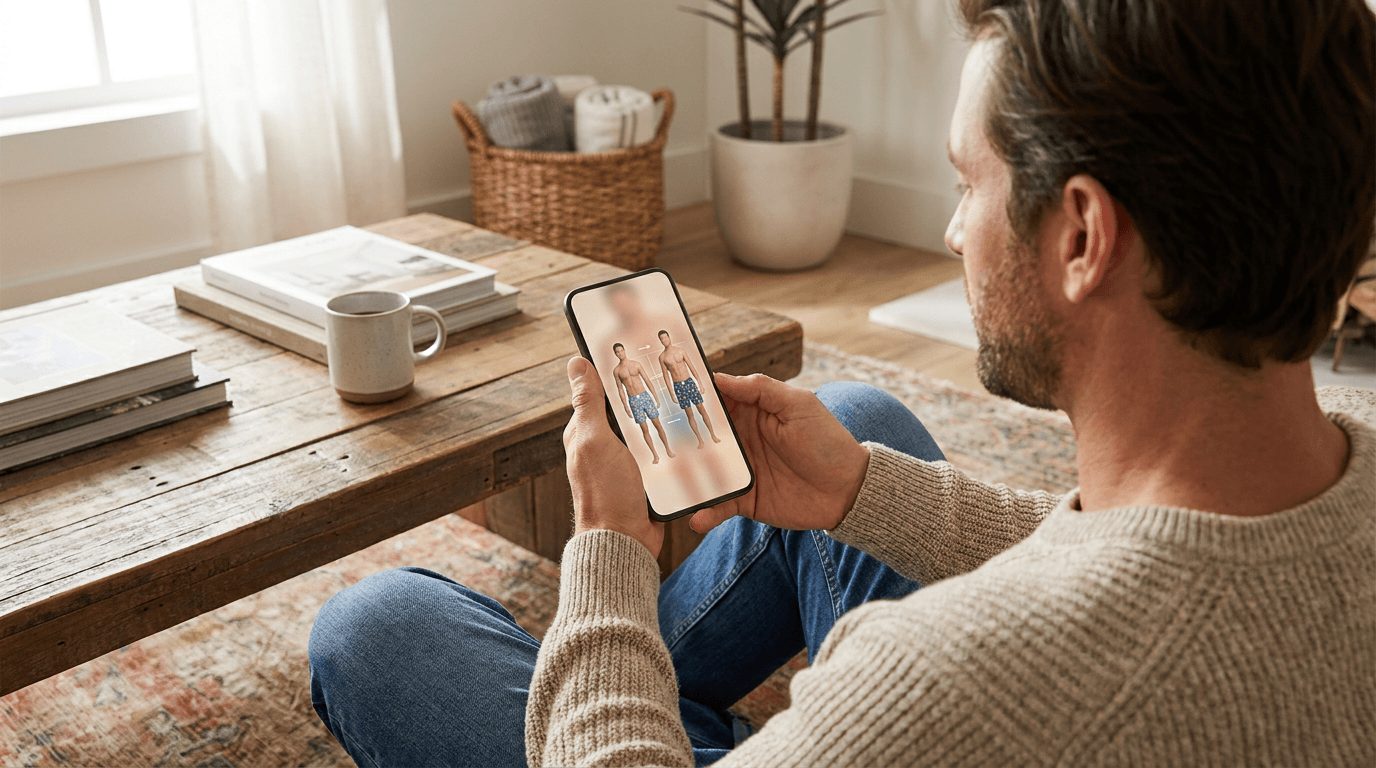
Quick answer
Most fashion categories treat a wrong-fit order as an inconvenience: repackage it, print a label, wait for the refund. Swimwear often skips straight to a worse outcome, an item the store will not take back at all. That raises the stakes on getting the fit right before checkout, not after.
Why does swimwear return more than other clothing?
Fit standards for swimwear vary more between brands than almost any other garment type. A medium top from one label can sit closer to a small from another, and stretch fabric compresses or stretches differently depending on the body wearing it, in a way a size chart cannot fully capture.
Without a fitting room, the rational response is to order more than one size and return the one that does not work. That practice, often called bracketing, is already one of the largest contributors to fashion's overall return rate, covered in fashion ecommerce return statistics. Swimwear amplifies it, since the fabric leaves less room to guess wrong and still get away with it.
Why is a wrong-fit swimsuit often not returnable at all?
Hygiene rules make sense from a resale standpoint, but they land hardest on the shopper who guessed wrong on size.
- Hygiene liner requirements: many brands only accept a return if the built-in liner is still attached and untouched, which rules out anyone who tried the suit on for more than a few seconds.
- Final sale on discounted or clearance items: swimwear bought during a sale period is frequently excluded from returns entirely, on top of the usual hygiene condition.
- No returns once worn in water: chlorine, salt water, and sun exposure change fabric in ways a store cannot resell, so a suit worn even once for its actual purpose is often no longer eligible.
Put together, a swimwear return is not always available as a fallback plan. That is a sharper version of the problem covered in how to reduce online fashion returns: the cheapest return to process is the one that never has to happen, and for swimwear specifically, it may be the only kind that is possible.
What does virtual try-on actually change for a swimwear shopper?
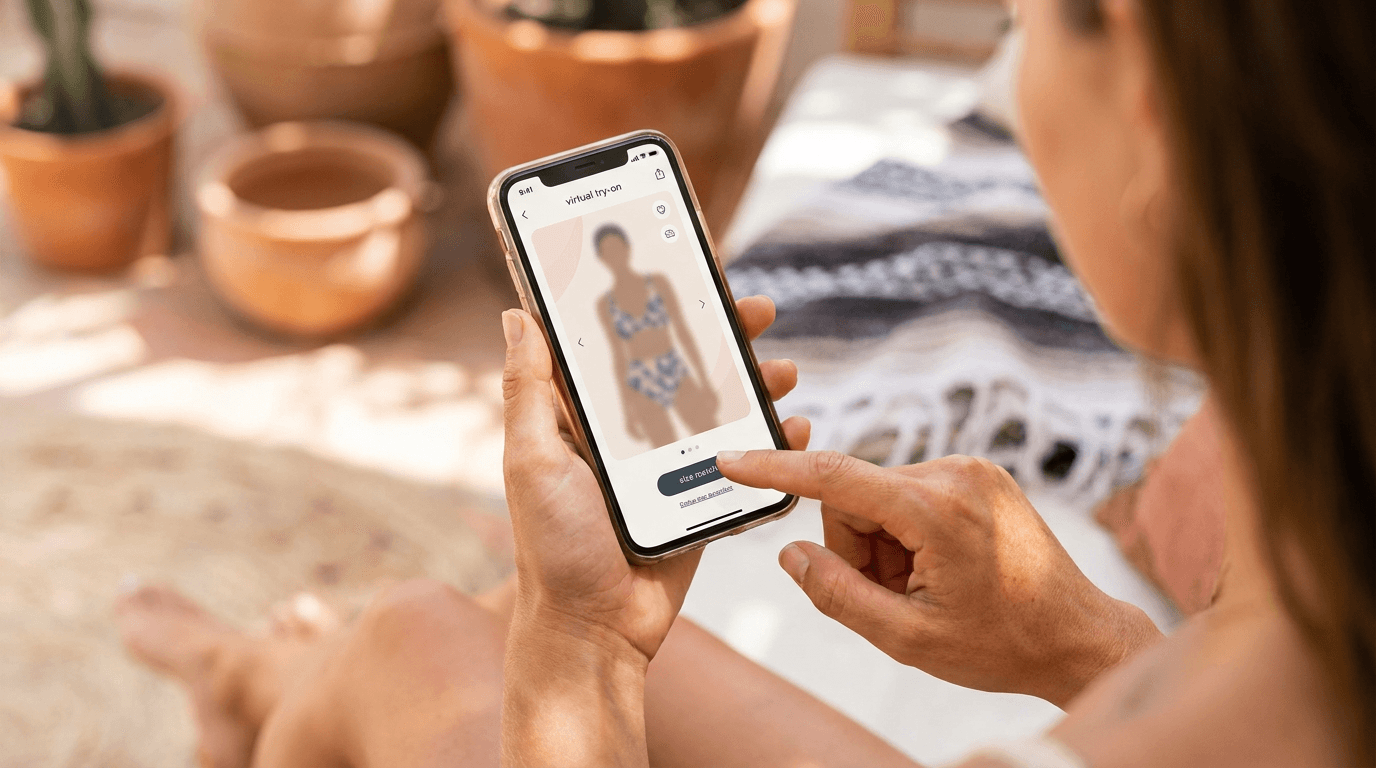
A product photo shot on a professional model answers one question: what does this swimsuit look like. It does not answer the question a shopper actually has, which is what this swimsuit will look like on them. Virtual try-on renders the garment against the shopper's own photo instead, so coverage, waistband height, and how the fabric sits at the shoulder show up before the order ships, not after it arrives.
That is a meaningfully different kind of information than a size chart or a fit note provides. A number on a chart cannot show whether a bottom rides higher on one body type than another, or whether a halter top's coverage changes with a different bust size. A rendered preview shows it directly.
What should a swimwear store look for in a try-on tool?
Not every virtual try-on tool handles this category the same way. A few checks separate one that actually helps from one that just adds a novelty feature to a product page.
- Body size compared to garment size, not just relabeled: a small and a large should show a visibly different fit, not the same rendered shape with a different tag. Our guide on virtual try-on for plus size clothing covers what body-size-aware rendering actually looks like in practice.
- The shopper's real body preserved, not reshaped: swimwear leaves less fabric to hide a rendering mistake behind than a jacket or a kurta does, so a tool that quietly changes body shape to fit the garment is a bigger problem here than in almost any other category.
- Support for separate pieces: a two-piece suit needs a top and a bottom rendered together, not a tool built only for single full-body garments.
- A clear answer on photo handling: any tool asking for a body photo for a swimwear try-on should state plainly what happens to that photo and how long it is kept, before a shopper uploads anything.
How does Corlen fit into a swimwear store's checkout flow?
Corlen renders a shopper's uploaded photo against a store's real garment images, and a swim top and bottom can be selected and generated together the same way any other two-piece outfit works on the platform. The shopper's face, body shape, and background stay locked between the uploaded photo and the result, so only the clothing changes, which matters more for a category with less fabric coverage to begin with.
On a Shopify store, this runs directly on the product page through Corlen's Shopify app, with no separate app or redirect for the shopper. A team building a custom flow, including one where try-on needs to sit inside an existing booking or fitting experience, can use the same engine through the developer API.
See it directly first: try Corlen on your own photo, no account needed for a first result.
Frequently asked questions
Why does swimwear have a higher return rate than most clothing?
Cuts and sizing vary more between swimwear brands than almost any other category, and stretch fabric behaves differently depending on the body underneath it. Without a fitting room, shoppers routinely order two sizes just to compare, planning to send one back before they even know which one fits.
Why can't a wrong-fit swimsuit just be returned like other clothing?
Many swimwear brands require the item unworn, with tags attached and the hygiene liner still in place, and some mark swimwear as final sale outright, especially once it has touched water or was bought on sale. A fit mistake on a swimsuit is often a sunk cost, not a simple exchange.
What does virtual try-on actually change before a swimwear purchase?
It shows coverage, drape, and how the fabric sits at the waist and shoulder on the shopper's own body, the details a flat product photo or a single hanger shot cannot answer. That closes the information gap before checkout, which matters more here because there is rarely a way to close it after.
Can a two-piece swim top and bottom be tried on together?
Yes. Corlen renders garments as separate layers rather than one fixed outfit, so a top and a bottom can be selected and generated together on the same photo, the same mechanism used for any two-piece Western outfit.
Is it safe to upload a photo for a swimwear try-on?
Corlen does not run face recognition on any uploaded photo, and kiosk photos are auto-deleted on a short retention window. Our guide on is virtual try-on safe covers the full privacy handling in detail.
Ready to add real try-on to your store?
Install Corlen on Shopify in minutes, or build it into your own platform with the developer API.
Similar posts
Virtual Try-On for Made-to-Measure and Custom Clothing Stores
Made-to-measure stores fix fit with tape measures, not try-on. See where a virtual try-on preview still helps a custom clothing shop, and where it does not.
Read articleGuidesVirtual Try-On for Streetwear Brands: Prints, Drops and Fit
Streetwear sells on graphics, oversized cuts and limited drops. See what a streetwear store should test in virtual try-on before relying on it for a release.
Read articleGuidesVirtual Try-On for Knitwear and Sweaters: What to Test First
Knitwear stretches, drapes and runs oversized, which makes fit hard to judge online. See where virtual try-on helps a sweater store and what to test before you rely on it.
Read articleSee it on your own photo
Corlen shows your customers how any garment looks on their own body, in seconds. Try it free, no account needed.
Try Corlen free