Virtual Try-On for Oversized Clothing and Streetwear

Quick answer
Ask a streetwear shopper why they hesitate before checkout and the answer is rarely the price. It's not knowing whether the hoodie in the photo is going to look intentionally oversized on them or just look like the wrong size.
Is oversized just a bigger size?
No, and this is the part a size chart cannot capture. A garment labeled oversized is usually cut differently from the start: the shoulder seam sits lower than the shoulder bone on purpose, the body runs boxier through the torso, and the pattern includes extra fabric that's meant to hang rather than skim the body. Sizing up in a fitted garment that was never drafted to drape gives a shopper more fabric in the wrong places, not the silhouette they were actually going for.
- Drop shoulder places the seam partway down the upper arm instead of at the shoulder bone, which is what creates the slouched look, not the overall size.
- Boxy body shape runs straight from chest to hem instead of narrowing at the waist, independent of how large or small the garment is labeled.
- Extra length is often intentional too, meant to hit at a specific point on the hip or thigh rather than the natural waist a fitted piece would target.
Why is oversized fit especially hard to judge online?
A size chart records body measurements: chest, waist, length. It says nothing about how much ease a specific garment is designed to have beyond those measurements, which is the entire point of an oversized cut. Two shoppers with an identical chest measurement can want, and get, completely different amounts of room in the same size of the same hoodie, and the chart has no way to communicate that difference.
Product photography compounds the problem rather than solving it. A single styling shot on one model at one height shows one version of how the drop shoulder and boxy hem land. It doesn't answer the question a shorter or taller shopper actually has: will this look intentionally oversized on me, or will it look like I ordered the wrong size.
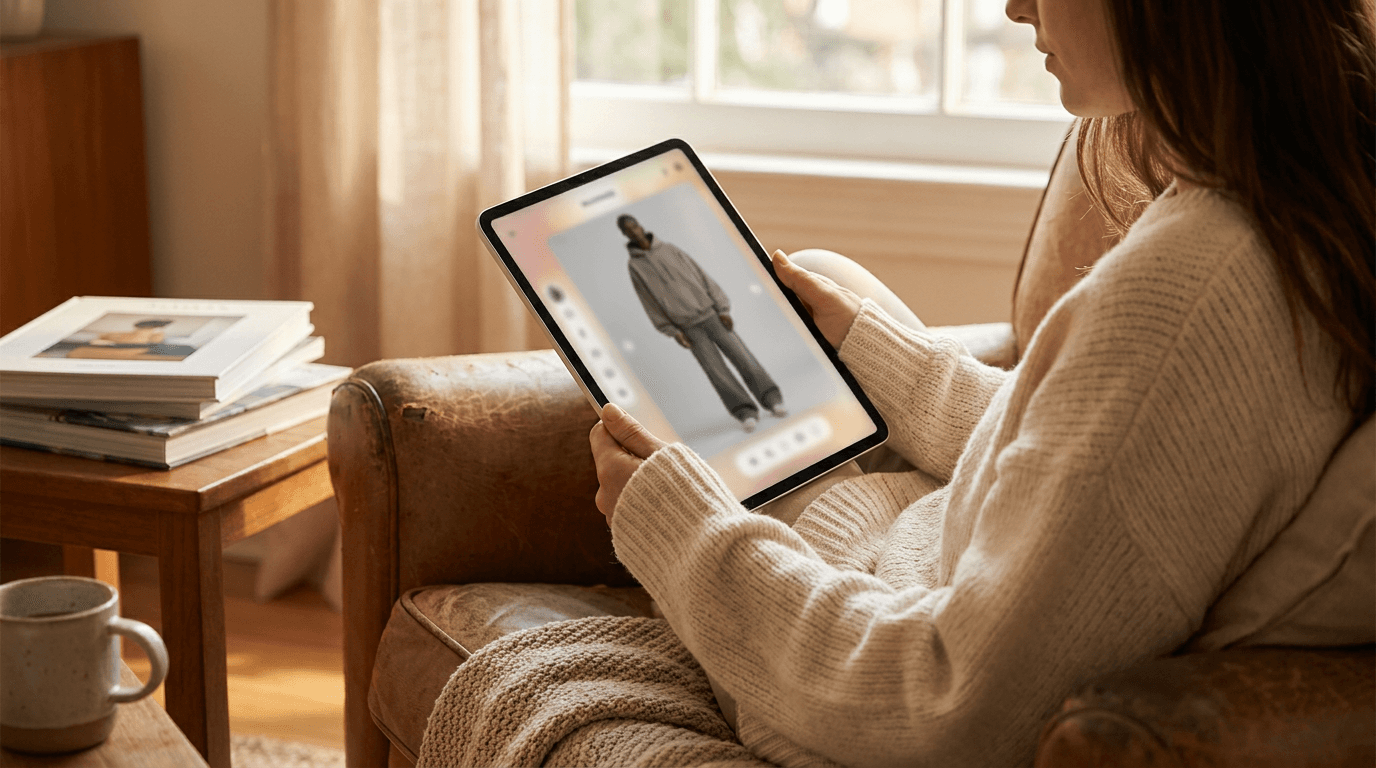
Why do size labels stop being a reliable reference here?
Clothing sizing already varies inconsistently from brand to brand, a problem covered in more detail in our post on virtual try-on for jeans. Oversized and streetwear pieces add a second layer on top of that: when an oversized silhouette is trending, it isn't unusual for a brand to add extra room to a garment's actual measurements while keeping the same size label it uses on a fitted style, since the label was never meant to describe the same thing on both.
The result is that a size label on an oversized piece answers less than usual. A medium in an oversized hoodie and a medium in a fitted T-shirt from the same brand can be built to entirely different specs, and nothing on the product page tells a shopper how far apart they are.
What can virtual try-on actually show for an oversized piece?
A tool built to compare a shopper's actual body against the garment's own labeled size can render the visible gap between the two, across the full range from barely noticeable to deliberately extreme. That's a direct answer to the question a size chart can't touch: not what the garment measures, but how loose it will genuinely sit on this specific body.
The same test that works for any other fit category applies here too: generate the same piece at two different size settings on the same photo. If the drape, shoulder position, and sleeve length change visibly between them, the render is doing real work. If the shape looks identical with a different label attached, it isn't.
How does Corlen handle oversized and streetwear pieces?
A shopper sets their own body size separately from the garment's size, and the sizing range includes a dedicated Baggy option past the standard XS through XXL scale specifically for this kind of fit. Corlen renders across the full mismatch range between the two, from a subtle difference up to an extreme oversized fit, where the render shows the shoulder seam sitting well past the actual shoulder line, sleeves reaching past the wrist, and fabric draping loosely rather than clinging to the body, rather than a single generic looser copy of the same photo.
Layering matters for streetwear specifically, so jackets and hoodies get their own outerwear slot separate from a base top and bottoms, and a full look, t-shirt, jacket, and jeans, can be generated together in one pass on the same photo. The shopper's face, body shape, and background stay locked between the uploaded photo and the result, so only the clothing changes.
On a Shopify store, this runs directly on the product page through Corlen's Shopify app, and on WooCommerce through the WooCommerce plugin. For the mechanics of how a single size comparison actually renders, see will this shirt fit me. Teams building a custom storefront can reach the same rendering engine through the developer API.
See it directly first: try Corlen on your own photo, no account needed for a first result.
Frequently asked questions
Is oversized just a bigger size?
No. Oversized is a distinct cut, usually with a dropped shoulder seam, a boxier body, and extra fabric built into the pattern on purpose. Sizing up in a garment that was never designed to hang loosely gives a shopper more fabric in the wrong places, not the intended oversized silhouette.
Why is oversized and streetwear fit especially hard to judge online?
A standard size chart records body measurements, not how much room a garment is designed to have beyond them. Two shoppers with identical measurements can want completely different amounts of ease, and a chart has no field for that. Product photos usually show one styling choice on one model, which doesn't answer how the same drop shoulder or boxy hem lands on a different frame.
Do brands keep the same size label but change the actual measurements for oversized pieces?
It happens. When an oversized silhouette is trending, some brands add extra room to a garment's actual measurements while keeping the same size label the brand used for a fitted version, which makes size charts a weaker reference than usual for that specific piece.
Can virtual try-on show how oversized a piece will actually look on someone?
A tool built to compare a shopper's own body size against a garment's labeled size can render a visible difference between them, including at the extreme end: shoulders sitting well past the shoulder line, sleeves reaching past the wrist, fabric draping loosely rather than skimming the body.
How does Corlen handle oversized and streetwear pieces?
A shopper sets a body size separate from the garment's size, including a dedicated Baggy option beyond the standard XS through XXL range. Corlen renders the difference across a full mismatch range, from a barely-there change to an extreme oversized fit, and jackets and hoodies get their own layering slot so a full streetwear look, base layer, outerwear, and bottoms, can be tried on together.
Ready to add real try-on to your store?
Install Corlen on Shopify in minutes, or build it into your own platform with the developer API.
Similar posts
Virtual Try-On for Lingerie and Intimates Stores: What Works
Running a lingerie or intimates store? Photo try-on is the wrong tool for bras and briefs, but it can sell your loungewear and robes. Here is the honest split.
Read articleGuidesVirtual Try-On for Headless Shopify and Hydrogen Stores
Running Shopify headless or on Hydrogen? Theme app blocks may not reach a custom storefront. See how try-on works there, using an API and a server route.
Read articleGuidesVirtual Try-On for Wix and Squarespace Stores: Your Options
Selling clothes on Wix or Squarespace? See how try-on works on a site builder: app market apps, embed code, or an API, and what to check before you pay.
Read articleSee it on your own photo
Corlen shows your customers how any garment looks on their own body, in seconds. Try it free, no account needed.
Try Corlen free