Virtual Fitting Room Software: What It Is and How to Choose One
Quick answer
"Virtual fitting room" gets stretched to cover almost anything on a vendor homepage, which is exactly why comparing them feels harder than it should. A size chart already asks a shopper to trust a stranger's tape measure. Software that tries to replace it is worth understanding before you buy one, not after.
What is virtual fitting room software?
It is software built to close the gap between what a shopper sees on a product page and what actually arrives in the box. Some versions show the item on the shopper's own body. Others skip the picture entirely and just recommend a size based on measurements and past purchases.
That range is why the category name is so loose. A jewelry brand's AR try-on and a denim brand's size predictor solve completely different problems, but both get called virtual fitting room software on their own marketing pages.
What are the different types of virtual fitting room technology?
- AR overlay: tracks a face, wrist, or hand through a live camera and places a digital object on top of it in real time. Fittingbox built its business on this for eyewear, and beauty platforms like Perfect Corp's YouCam use the same idea for makeup shades.
- 3D body scanning and size recommendation: measures a shopper's body, either from a scan or from answers to a short quiz, then matches it against a brand's own size chart. 3DLOOK estimates measurements from two photos, and Fit Analytics, an independent company again since reacquiring its own IP from Snap in 2024, runs size predictions for retailers including ASOS, Boohoo, Lacoste, and Tommy Hilfiger.
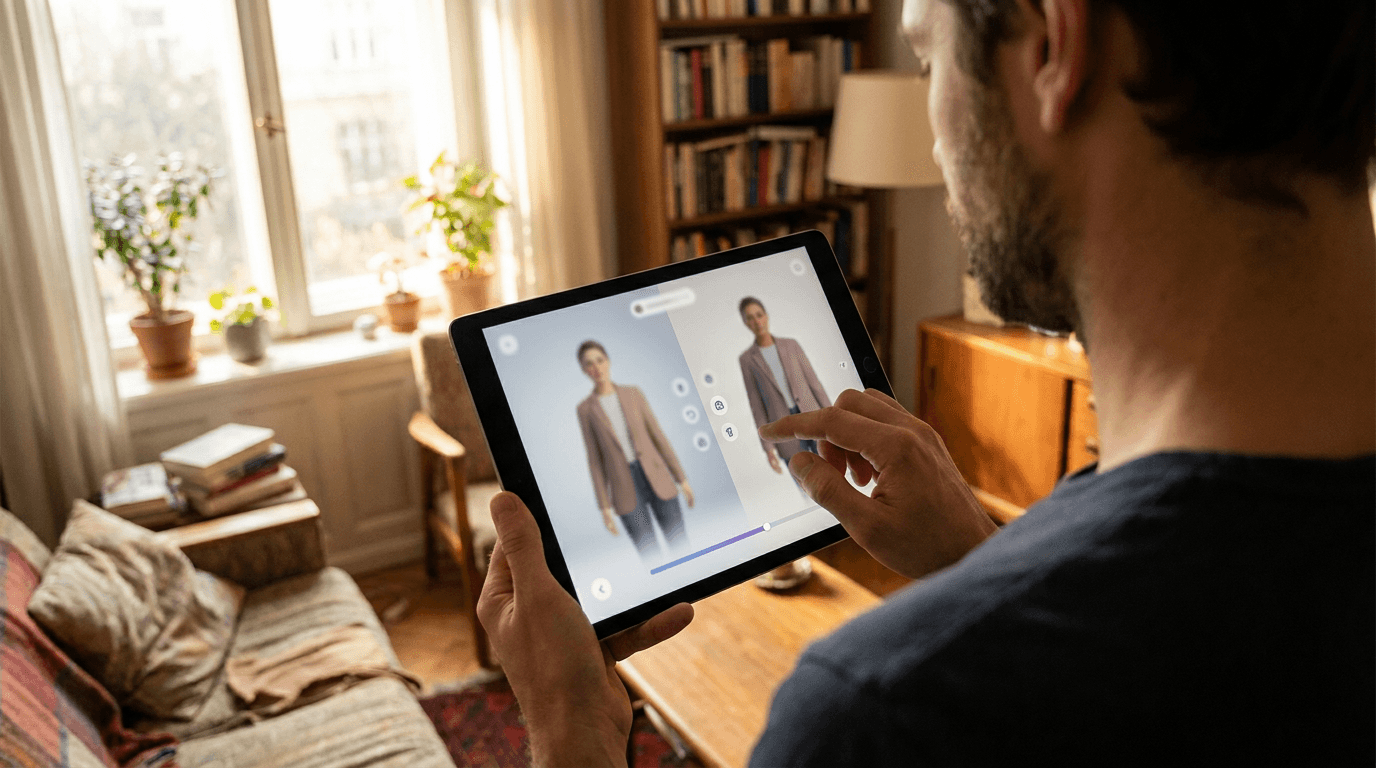
- AI photo based try-on: generates a new image of the shopper wearing a specific garment from one uploaded photo. Corlen, Genlook, and Antla all work this way, rendering fabric, fit, and drape instead of overlaying a flat graphic.

None of these three replace the other two. A store selling sunglasses and jackets in the same catalog might reasonably run AR on one product type and AI try-on on the other, rather than force one technology to cover both.
What should you actually check before choosing one?
- Match the technology to the product, not the pitch. A demo that looks great on eyewear tells you nothing about how it handles a wool coat.
- Ask whether pricing is public. If a pricing page's only button says "Book a Demo," plan on a sales call before you learn the number, and budget the time that costs.
- Check which garment categories are actually supported. Layered outfits, patterned fabric, and full length dresses are where a lot of tools quietly give up and hope nobody notices.
- Confirm what happens to a shopper's photo. Some tools store it, some process it in memory only. This matters for both trust and, depending on the market, real legal obligation.
- Time how long setup actually takes. An app store install is a different commitment than a scoped integration project with the vendor's own engineers.
How much does virtual fitting room software cost?
Self-serve AI try-on apps publish their pricing up front. Corlen's plans run from about 20 dollars a month for a small store up to several hundred for higher volume, the same pattern covered in more depth in how much does a virtual try-on app cost. Enterprise size recommendation and 3D scanning platforms mostly work the other way, quoting a price after a sales conversation rather than listing one, a distinction broken down further in enterprise virtual try-on software vs a self-serve app.
Which type fits a clothing store?
For a store built around full outfits rather than accessories, AI photo based try-on is the practical starting point. It does not need a body scanner, a dedicated app, or a live camera feed, just one photo and a garment image, which keeps setup down to an app install or an API key.
Try Corlen on your own photo to see what that actually looks like, or read the developer docs if you are evaluating the API side. Shopify merchants can also see it running as a real product page install at virtual try-on for Shopify.
Frequently asked questions
What is virtual fitting room software?
It is any tool that lets a shopper preview how a garment will look or fit before buying, without trying it on in person. That covers three different approaches: AR overlays, 3D body scanning paired with size recommendations, and AI photo based try-on.
Is virtual fitting room software the same as a virtual try-on app?
Virtual try-on app usually means one specific approach, generating an image of a shopper wearing a garment. Virtual fitting room software is the broader category name, and also covers size recommendation engines and body scanning tools that never produce an image at all.
Does virtual fitting room software require a body scan?
Only the 3D scanning type does. AR overlays track a face or wrist through a camera, and AI photo based try-on works from a single uploaded photo, so neither one needs a dedicated body scanner or a measuring app.
How much does virtual fitting room software cost?
It depends heavily on the type. Self-serve AI try-on apps publish monthly pricing, often 20 to 400 dollars depending on volume. Enterprise size recommendation and 3D scanning platforms usually sell through a custom quote instead of a published price list.
Ready to add real try-on to your store?
Install Corlen on Shopify in minutes, or build it into your own platform with the developer API.
Similar posts
Virtual Try-On for Big and Tall Clothing: Solving Two Fit Problems at Once
Big and tall sizing has to solve girth and length at the same time, and a size chart alone rarely does both. Here is what a fit preview needs to get right.
Read articleGuidesVirtual Try-On for Halloween Costumes: Why Costume Sizing Is Its Own Problem
Costume sizing rarely matches everyday clothing charts, and a bad fit often arrives too close to the date to fix. Here is how a fit preview helps.
Read articleGuidesDoes Virtual Try-On Increase Conversion Rate? What the Data Shows
Vendor studies report conversion lifts from 13 to 50 percent for virtual try-on. Here is what was measured, and how to check it against your own store.
Read articleSee it on your own photo
Corlen shows your customers how any garment looks on their own body, in seconds. Try it free, no account needed.
Try Corlen free