Do UK Retailers Need to Disclose AI Generated Try-On Images? ASA and CAP Code Rules
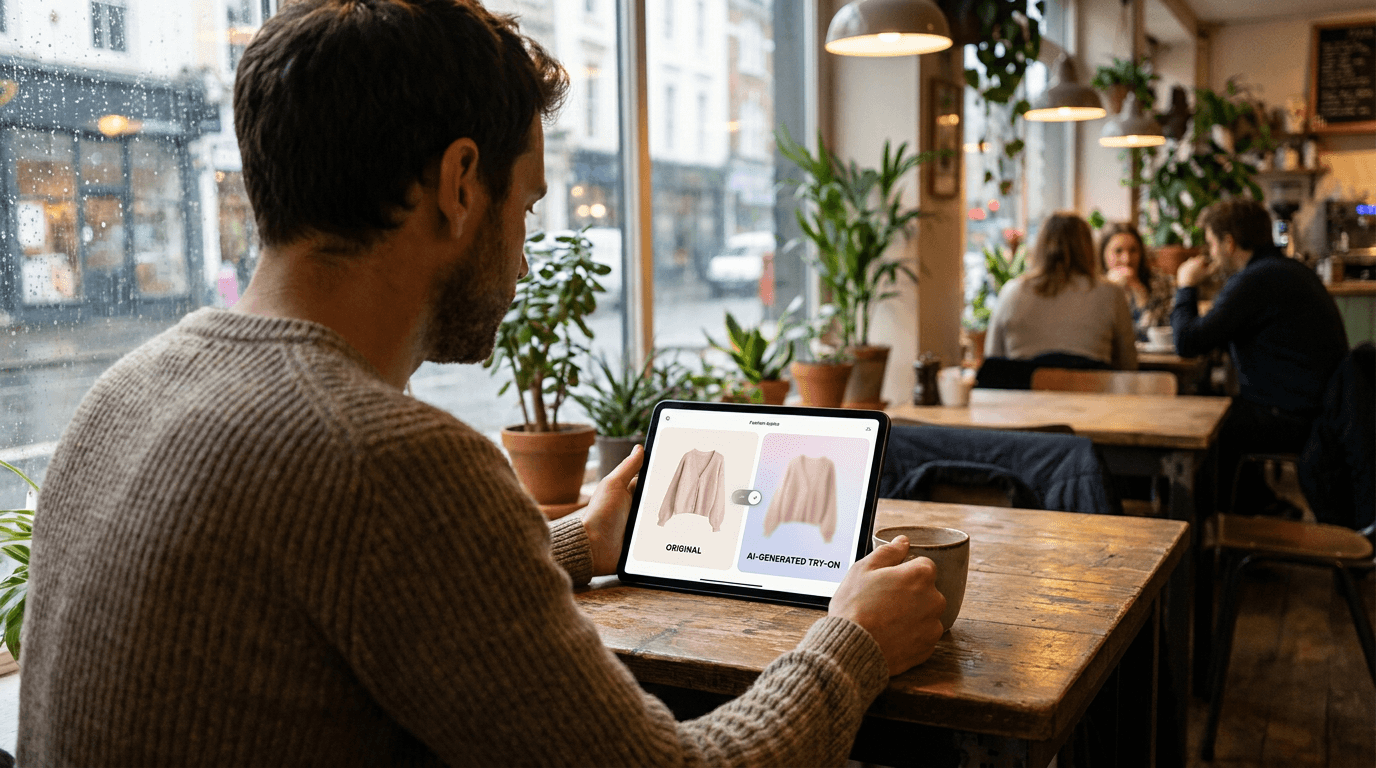
Quick answer
Retailers researching AI disclosure often start with the EU AI Act, since it names the obligation directly. That rule is covered in an earlier post on the EU AI Act's disclosure requirement. A UK based store needs a different map, because the UK left the EU AI Act's scope and runs its own advertising rulebook instead.
Does the UK have a law requiring AI disclosure in ads?
No single UK statute names AI generated advertising images. The Committee of Advertising Practice, which writes the CAP Code that the ASA enforces, confirmed in May 2025 that the Code contains no AI specific rules. Instead, the long standing rule against misleading advertising, that an ad must not mislead by inaccuracy, ambiguity, exaggeration, or omission, applies whether a person or a model generated the image.
That is a different structure from the EU AI Act's Article 50, which creates a standalone legal duty to label AI generated content. The UK runs advertising self regulation instead: a code written by the industry and enforced by an independent authority, not a dedicated AI statute working through the courts.
What does the CAP Code actually say about AI generated images?
CAP's May 2025 guidance frames the question as a single test: would the audience be misled if the use of AI were not disclosed? Where an AI generated image changes what a shopper sees or understands, for instance rendering a fit or a color the real product does not actually produce, disclosure is expected. CAP's own published example is a cosmetic ad showing an AI generated result that does not match real world outcomes.
- A misleading image cannot be fixed by a caption. CAP is explicit that disclosure does not rescue a fundamentally deceptive claim. It only helps when the underlying message is already honest and the image is a fair preview, not a false promise.
- Context matters more than a fixed wording. CAP recommends clear contextual language in a caption or tagline rather than a mandated phrase, unlike SB 942's prescribed manifest disclosure in the US, covered in an earlier post on California's AI Transparency Act.
- The rule reaches every UK advertiser, not only large platforms. There is no user count threshold here. A single store running virtual try-on on one product page sits under the same CAP Code as a national retail chain.
When should a retailer disclose that a try-on image is AI generated?
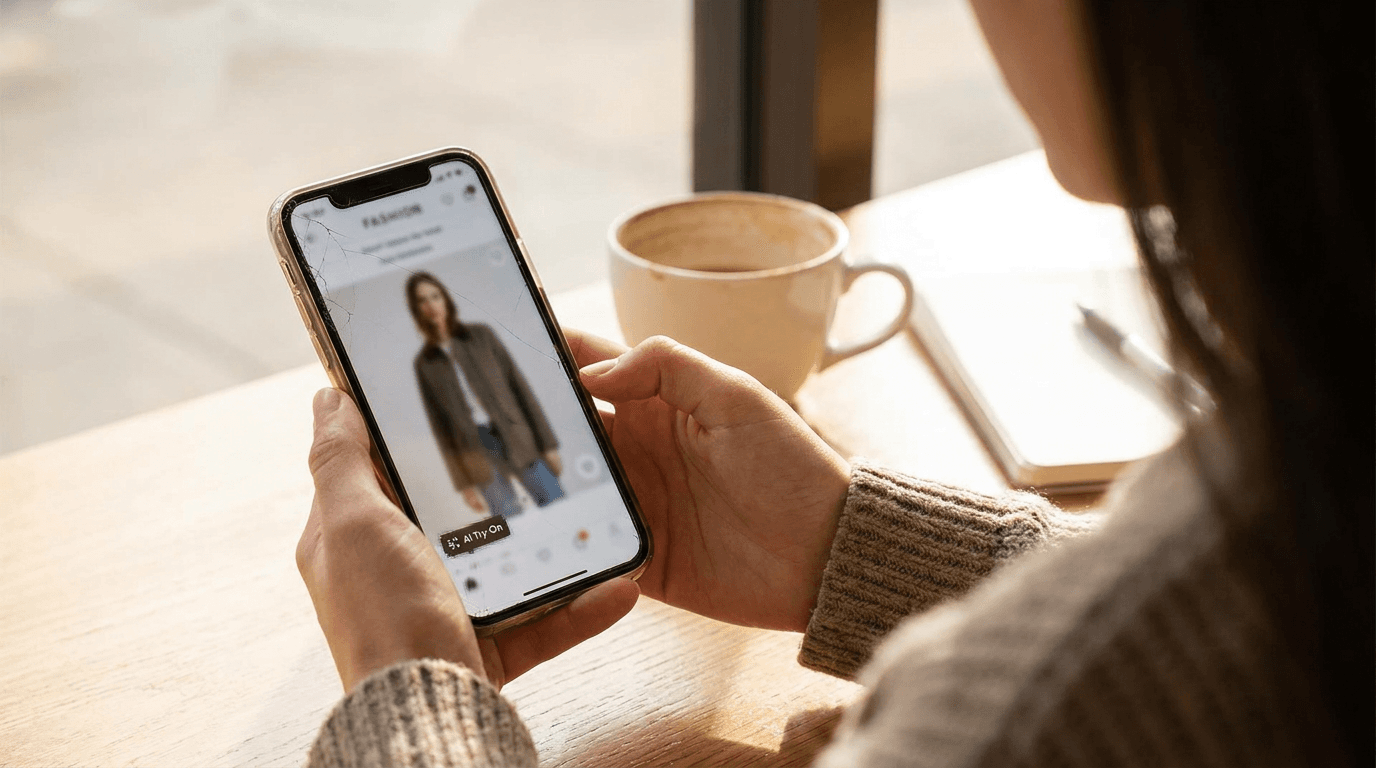
A virtual try-on result sits closer to CAP's flagged risk than a stock product photo does, because it is built specifically to show a named shopper how a garment would look on their own body. If a shopper could reasonably read the image as an unedited photograph of themselves, and the render meaningfully changes fit, drape, or color from what the garment does in person, CAP's own test points toward disclosure.
Waiting to find out exactly where that line sits in a future ruling is not the safer path. Labeling every AI generated result plainly, the same way a store already labels a sponsored post or an affiliate link, removes the ambiguity CAP's guidance is built around before a complaint ever arrives.
How is the ASA actually enforcing this in 2026?
The ASA is not waiting only on shopper complaints anymore. Its AI powered Active Ad Monitoring System proactively scans ads in targeted sectors, and this tool, not a complaint from the public, flagged the recycled material claims the ASA banned from Adidas, Uniqlo, and Calvin Klein ads in June 2026. That ruling concerned an unsubstantiated sustainability claim rather than an undisclosed AI generated image, but it shows how the ASA now enforces against fashion advertisers: automated, proactive, and already active in the exact sector virtual try-on serves.
No published ASA ruling yet names an undisclosed AI generated virtual try-on image specifically. That absence is not the same as safety. A code that already reaches misleading imagery, paired with a monitoring tool built to catch exactly this kind of claim at scale, points toward a first case being a matter of when, not if.
What should a UK fashion retailer running virtual try-on do?
- Label every AI generated try-on result visibly, in a caption or directly on the image, rather than relying on a footer disclaimer or a linked policy page.
- State plainly that a result is a preview, not a guarantee of exact fit, color, or fabric, so the label covers both the AI generated question and the accuracy expectation CAP actually tests for.
- Keep the same practice on every channel the image reaches, the product page, a paid social ad, and a WhatsApp share, since the CAP Code covers an ad wherever a shopper sees it, not only its original placement.
- Check exposure under other regimes too if the store also sells into the EU or the US. The earlier posts on the EU AI Act's disclosure rule and on SB 942 and the FTC cover the two other jurisdictions a UK based store with international customers may also need to satisfy.
How does Corlen handle AI disclosure already?
Corlen labeled its outputs before any of 2026's rules arrived. Every result on the in-store kiosk carries a visible AI GENERATED PREVIEW label directly on the image, and Corlen's terms state that a preview approximates fit, color, and fabric rather than guaranteeing them. On a Shopify store, that same labeling runs automatically through Corlen's Shopify app; a team on WordPress or a custom stack gets the identical behavior through the developer API.
For the EU side of this same question, read the earlier post on the EU AI Act's virtual try-on disclosure rule. For the US structure, see SB 942 and the FTC, explained.
See the label in place directly: try Corlen on your own photo, no account needed for a first result.
Frequently asked questions
Does the UK legally require disclosing AI generated fashion images?
Not through a dedicated AI statute. The CAP Code, enforced by the ASA, has no AI specific rule, but its existing ban on misleading advertising already applies to an AI generated image the same way it applies to any other image. Whether disclosure is required in a given ad depends on whether leaving it out could mislead a shopper, not on a fixed legal threshold.
Is the CAP Code the same as the EU AI Act?
No. The EU AI Act's Article 50 is a binding law that puts a specific disclosure duty on the business showing AI content to shoppers. The CAP Code is an advertising industry code enforced by the ASA, a self regulatory body, built around a general misleading-advertising test rather than an AI specific legal duty. A UK store selling into the EU can be in scope of both at once.
What happens if a retailer does not disclose an AI generated try-on image and it turns out to be misleading?
The ASA can uphold a complaint, require the ad to be withdrawn or amended, and publish the ruling publicly, which carries its own reputational cost. Repeated non compliance can lead to referral to Trading Standards or, for broadcast ads, Ofcom.
Does virtual try-on count as the kind of AI generated image CAP is concerned about?
It can, if the render meaningfully changes what a shopper would see compared to the real garment on their body. A clearly labeled preview that a store does not present as an exact guarantee is a different case from an unlabeled image edited to hide a product's real flaws.
Does Corlen already meet UK disclosure expectations?
Corlen labels every try-on result as an AI generated preview directly on the image and states in its terms that a preview approximates fit and color rather than guaranteeing them, a practice already in place before CAP's May 2025 guidance and the ASA's 2026 monitoring tool.
Ready to add real try-on to your store?
Install Corlen on Shopify in minutes, or build it into your own platform with the developer API.
Similar posts
Real-Time Virtual Try-On: What It Is and Whether Your Store Needs It Yet
Real-time virtual try-on renders clothing on a shopper's live camera feed instead of one photo. Here is what shipped in 2026, and what it means for your store.
Read articleTrendsDoes Zalando Have Virtual Try-On? Inside Its 40% Return Drop
Zalando's virtual fitting room cut returns 40% in a Levi's pilot and has now reached 1.5 million shoppers. Here is what the real numbers show.
Read articleTrendsDoes Snapchat Have Virtual Try-On for Clothes?
Snapchat has run AR try-on since 2021: Camera Kit shoe lenses, in-store AR Mirrors. Here is what it covers and how it differs from AI try-on.
Read articleSee it on your own photo
Corlen shows your customers how any garment looks on their own body, in seconds. Try it free, no account needed.
Try Corlen free