How to reduce fashion returns during Black Friday and Cyber Monday
Quick answer
Most Black Friday planning goes into traffic and conversion. Returns get planned for afterward, once the boxes start coming back. That order is backward for fashion specifically, because the return rate on a sale weekend is not a fixed cost. A large share of it comes from the same fixable problem year round: the shopper could not tell how the item would actually fit.
Why do fashion returns spike during Black Friday and Cyber Monday?
Three things happen at once during a big sale weekend that do not happen on a normal Tuesday. Order volume jumps, so the raw number of returns jumps with it even if the rate stayed flat. A meaningful share of those orders are gifts, bought for someone whose exact size the buyer is estimating. And the deal pressure itself pushes people to decide fast, which for clothing usually means ordering more than one size just in case.
None of that is unique to Black Friday. It is the same fit-uncertainty problem fashion has all year, just compressed into a shorter window with more orders moving through it.
When is Black Friday and Cyber Monday in 2026?
Black Friday is November 27, 2026, the Friday after Thanksgiving. Cyber Monday is November 30, 2026. Most fashion brands run their sale across the entire stretch, sometimes starting the week before, so the return spike is not a single weekend either. It builds through late November and lands hardest in the two to three weeks after Christmas, once gifts get opened and tried on for real.
- Thanksgiving: November 26, 2026
- Black Friday: November 27, 2026
- Cyber Monday: November 30, 2026
- Peak return window: typically the last week of December through mid January, once gifted items are opened and tried on
What actually drives the extra returns?
Discount pricing removes the natural brake on ordering a backup size. When a jacket is 30 percent off, buying it in two sizes to be sure feels cheap, even though it doubles the shipping and restocking cost on the retailer's side. Add gift buying, where the purchaser is not the person who will wear the item, and the odds of a wrong-size order climb further.
- Sale pricing lowers the cost of guessing. A discounted item makes ordering two sizes to keep one feel low risk to the shopper, even though it is not low cost for the store.
- Gift purchases remove the one signal that normally helps. The buyer cannot try anything on themselves, and often does not know the recipient's exact size in that specific brand.
- Compressed decision time favors backup ordering. A shopper moving fast through a 48 hour sale window defaults to the safe choice, which for clothing is ordering more than they need.
How can a fashion store prepare before the sale starts?
The fixes that matter most are the ones already in place before traffic arrives, not the ones added while a customer is on the return line with support.
- Tighten size charts and fit notes now. A vague size chart causes more guessing during a high-volume weekend than it does on a quiet Tuesday, simply because more people are relying on it at once.
- Add real customer photos to reviews where you can. A photo of the item on a real body does more to answer the fit question than another paragraph of copy.
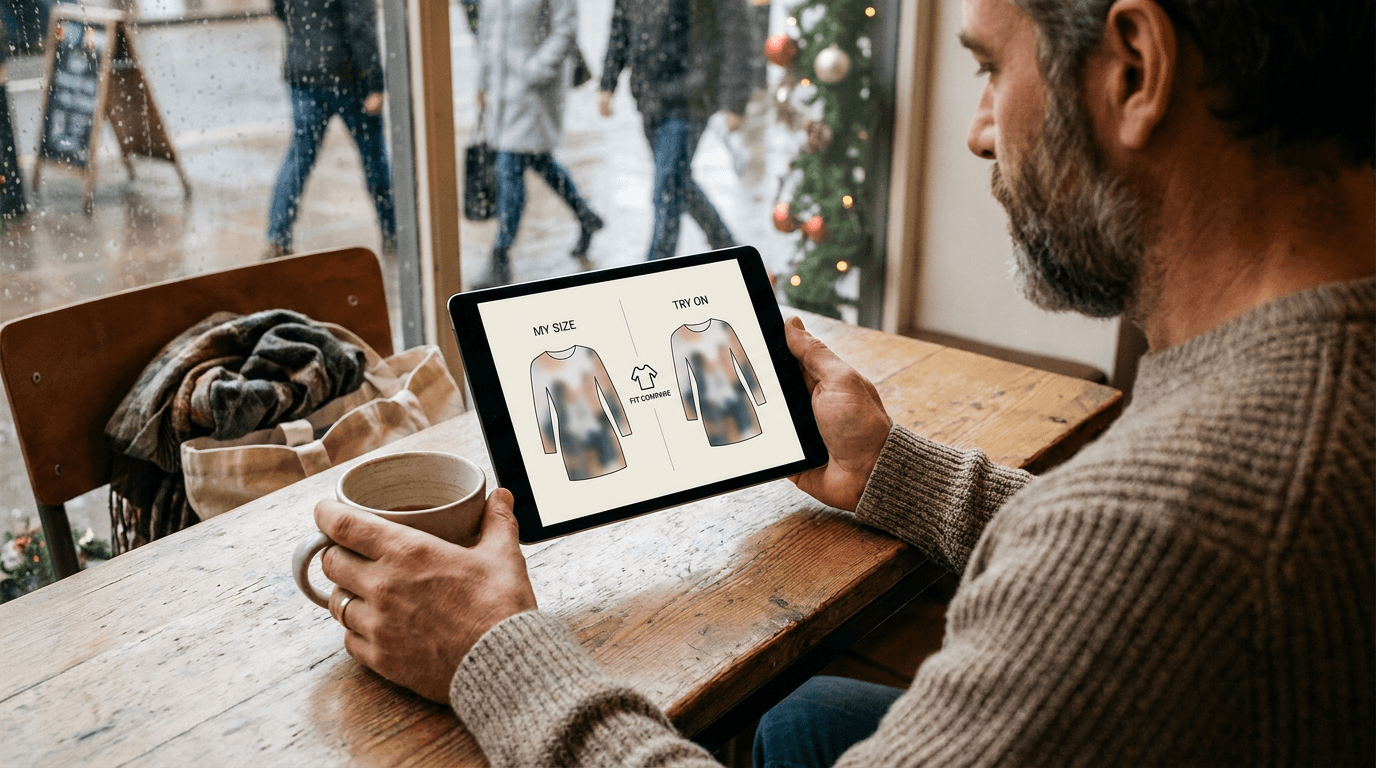
- Give shoppers a way to preview fit before checkout. This is where virtual try-on does its job: a shopper uploads or captures a photo, sees the item on themselves, and has one less reason to order a second size just in case.
- Test any new tool weeks ahead, not during the sale. Install and verify a catalog sync in October or early November, so Black Friday traffic is not the first real test of a new feature.
Where does virtual try-on fit into a Black Friday returns plan?
Corlen adds a try on button directly to your Shopify product pages, so a shopper deciding between two sizes during a sale can actually see the difference on their own body instead of guessing. That preview runs at the exact moment the wrong choice usually gets made: right before checkout, under time pressure, often for a gift the buyer will not wear themselves.
For the year round version of this problem and the full list of what moves a fashion store's return rate, see how to reduce online fashion returns. If you want the sourced numbers behind fashion's return rate generally, fashion ecommerce return statistics breaks down where the National Retail Federation's figures actually come from.
See it yourself before the sale season starts: try Corlen on your own photo in a few seconds, no account needed, or check the Shopify integration if you are getting your store ready for Black Friday.
Frequently asked questions
When is Black Friday and Cyber Monday in 2026?
Black Friday falls on November 27, 2026, the day after Thanksgiving. Cyber Monday follows on November 30, 2026. Most fashion retailers extend deals across that full window rather than treating it as two separate one-day events.
Why do returns increase so much during the holiday shopping season?
A few things stack on top of each other: gift purchases for someone whose size the buyer is guessing at, rushed decisions made during a limited sale window, and discount pricing that makes it cheap to order two sizes and send one back. Fashion already returns more than almost any other category because fit cannot be judged from a photo, and the holiday season adds volume and urgency on top of that existing problem.
Does virtual try-on actually reduce returns during a big sale event?
It targets the same root cause it targets year round: the shopper cannot tell how a garment will fit before it arrives. That gap does not go away during a sale, it gets bigger, because more people are buying and more of them are guessing sizes for someone else. A shopper who can preview an item on their own photo before checkout has one less reason to order a backup size.
When should a store add virtual try-on before Black Friday?
Weeks before the sale, not during it. A Shopify app install and a product catalog sync both take a little time to test properly, and the last week before Black Friday is the wrong moment to be debugging a new feature on your highest-traffic pages of the year.
Do generous return policies make this problem worse?
They can, in a specific way. A longer holiday return window is good for the customer and often necessary competitively, but it also means more returns land in January rather than December, stretching out the cost and the processing backlog rather than removing it. A generous policy is not a substitute for reducing the number of wrong-size orders in the first place.
Ready to add real try-on to your store?
Install Corlen on Shopify in minutes, or build it into your own platform with the developer API.
Similar posts
Virtual Try-On for Made-to-Measure and Custom Clothing Stores
Made-to-measure stores fix fit with tape measures, not try-on. See where a virtual try-on preview still helps a custom clothing shop, and where it does not.
Read articleGuidesVirtual Try-On for Streetwear Brands: Prints, Drops and Fit
Streetwear sells on graphics, oversized cuts and limited drops. See what a streetwear store should test in virtual try-on before relying on it for a release.
Read articleGuidesVirtual Try-On for Knitwear and Sweaters: What to Test First
Knitwear stretches, drapes and runs oversized, which makes fit hard to judge online. See where virtual try-on helps a sweater store and what to test before you rely on it.
Read articleSee it on your own photo
Corlen shows your customers how any garment looks on their own body, in seconds. Try it free, no account needed.
Try Corlen free