The environmental impact of clothing returns

Quick answer
Fashion retailers already track returns as a cost problem. What gets less attention is the second bill that comes with every return: the shipping trip back, the handling, and, for a large share of returned garments, a trip to landfill or an incinerator instead of a resale shelf.
How much carbon do clothing returns actually produce
The fashion industry's overall footprint is already large. Sustainability research on the sector, including analysis from organizations such as the Ellen MacArthur Foundation, has for years put its share of global carbon emissions at roughly a tenth of the total, ahead of international aviation and shipping combined. Returns add a specific slice on top of that baseline, since almost none of a return's environmental cost is offset by anything useful happening to the item once it comes back.
UK-specific figures give a sense of scale. Statista's analysis of UK online fashion returns put the resulting emissions at roughly 750,000 tonnes of carbon dioxide in a single year, close to the annual energy use of around 98,000 homes, from garments that were shipped once, sent back, and often never resold at all.
Why so much returned clothing ends up in landfill
A returned garment does not go straight back onto a shelf. Someone has to inspect it, steam or repackage it, and get it back into active inventory before the season or the trend has moved on. For a large share of returns, that process costs more than the item is worth to resell, especially for fast fashion priced to sell cheaply in the first place.
- Fashion moves fast. A garment that sits in a returns queue for even a few weeks can miss the season it was bought for entirely.
- Inspection and repackaging cost real labor. Steaming, tag replacement, and quality checks add up per unit in a way that only makes sense for higher-value items.
- Some items simply cannot be resold as new. Worn, altered, or damaged returns, along with anything that failed a hygiene check, are routinely written off regardless of their original price.
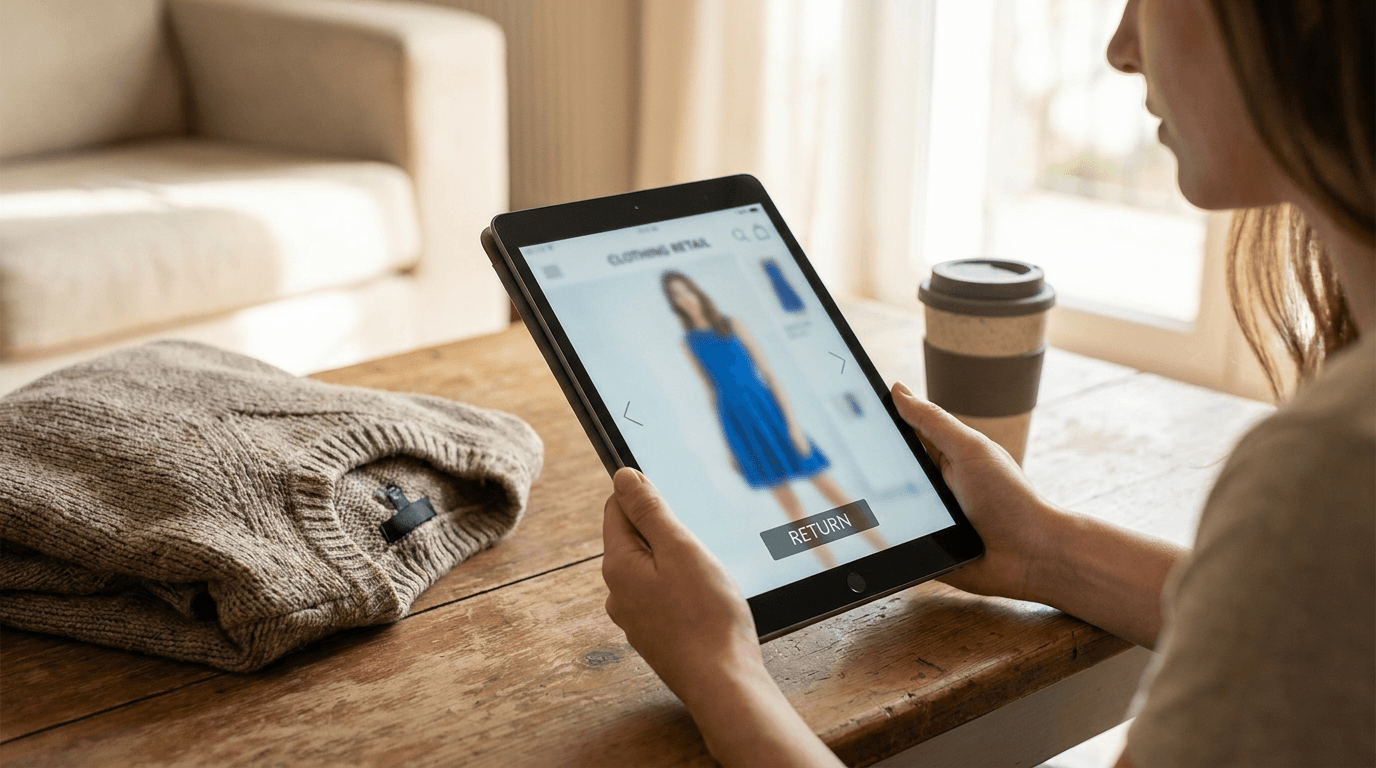
Reporting on UK retail returns has repeatedly put the share of returned clothing that ends up destroyed or landfilled at well over half, not because retailers want to waste it, but because reselling it costs more than the item is worth. That math is exactly what regulators are starting to push back on.
Is this turning into a legal problem, not just an environmental one
It is heading that way in the EU, and UK policy has tended to track EU rules on textiles closely even after Brexit. The EU's Ecodesign for Sustainable Products Regulation introduces a phased ban on destroying unsold consumer goods, with textiles named specifically and obligations beginning through 2026 and 2027. Writing off a returned garment is moving from a quiet internal cost decision toward something a retailer may need to justify.
None of that regulation targets returns by name. It targets destruction. But a returned item that is not worth reselling is exactly the kind of stock that ends up destroyed, so a rule aimed at unsold goods lands squarely on the same pile of clothing that fashion returns keep feeding.
Why prevention beats cleanup
Every fix on this list so far deals with a garment after it has already come back. Better sorting, faster processing, and donation partnerships all help, but they are cleanup. The cheaper and lower-impact move is preventing the return in the first place, and most avoidable fashion returns trace back to the same root cause covered in fashion ecommerce return statistics: the shopper did not know how the item would actually fit or look before it arrived.
That is a fit problem before it is a waste problem. How to reduce online fashion returns covers the full set of levers, and the highest-leverage one is letting a shopper see the garment on their own body before they buy it, not on a model with a different build. Corlen does exactly that: a shopper uploads or captures a photo, picks an item from the store's real catalog, and sees themselves wearing it, in their own size, in seconds, on their own product page, in a kiosk, or through a direct API integration.
Getting started
A store does not need a sustainability initiative to start on this. Cutting wrong-fit orders lowers cost and return-related waste at the same time, using the same fix. Try Corlen on your own photo in a few seconds, no account needed, and judge whether the preview is accurate enough to stop a size guess before it ships.
Frequently asked questions
Do clothing returns really have a meaningful environmental impact?
Yes. A return is not neutral once an item ships back to a warehouse. It adds a second shipping trip on top of the original delivery, and a large share of returned apparel is never resold at full price at all, so the environmental cost of making the garment in the first place is often wasted along with it.
Why does so much returned clothing end up in landfill instead of being resold?
Processing a single returned item, inspecting it, steaming or repackaging it, and getting it back into inventory before the trend or season passes, often costs more than the garment is worth to resell. Reporting on UK returns has put the share that ends up destroyed or landfilled at well over half. It is frequently cheaper for a retailer to write the item off than to restock it.
Is regulation changing how retailers handle returned clothing?
It is moving that way in the EU, which sets the direction UK retailers tend to follow. The EU's Ecodesign for Sustainable Products Regulation introduces a phased ban on destroying unsold consumer goods, including textiles, with obligations starting in 2026. That turns writing off a returned garment from a private cost decision into something regulators are starting to watch.
Does reducing returns help the environment as well as a retailer's costs?
Both move together. Every return a store prevents is one less reverse shipment, one less garment at risk of landfill, and one less unit of manufacturing impact spent on a sale that never really completes. The retailers already working hardest on cutting returns for cost reasons are, without necessarily framing it that way, also cutting their return-related emissions.
How does virtual try-on reduce the environmental impact of returns?
It removes the guesswork before the order ships rather than dealing with the item after it comes back. A shopper who sees an accurate preview of a garment on their own body is less likely to order the wrong size or a style that looks different than expected, which is where most avoidable returns start.
Ready to add real try-on to your store?
Install Corlen on Shopify in minutes, or build it into your own platform with the developer API.
Similar posts
Real-Time Virtual Try-On: What It Is and Whether Your Store Needs It Yet
Real-time virtual try-on renders clothing on a shopper's live camera feed instead of one photo. Here is what shipped in 2026, and what it means for your store.
Read articleTrendsDoes Zalando Have Virtual Try-On? Inside Its 40% Return Drop
Zalando's virtual fitting room cut returns 40% in a Levi's pilot and has now reached 1.5 million shoppers. Here is what the real numbers show.
Read articleTrendsDoes Snapchat Have Virtual Try-On for Clothes?
Snapchat has run AR try-on since 2021: Camera Kit shoe lenses, in-store AR Mirrors. Here is what it covers and how it differs from AI try-on.
Read articleSee it on your own photo
Corlen shows your customers how any garment looks on their own body, in seconds. Try it free, no account needed.
Try Corlen free