Does Product Video Reduce Returns in Fashion Ecommerce?
Quick answer
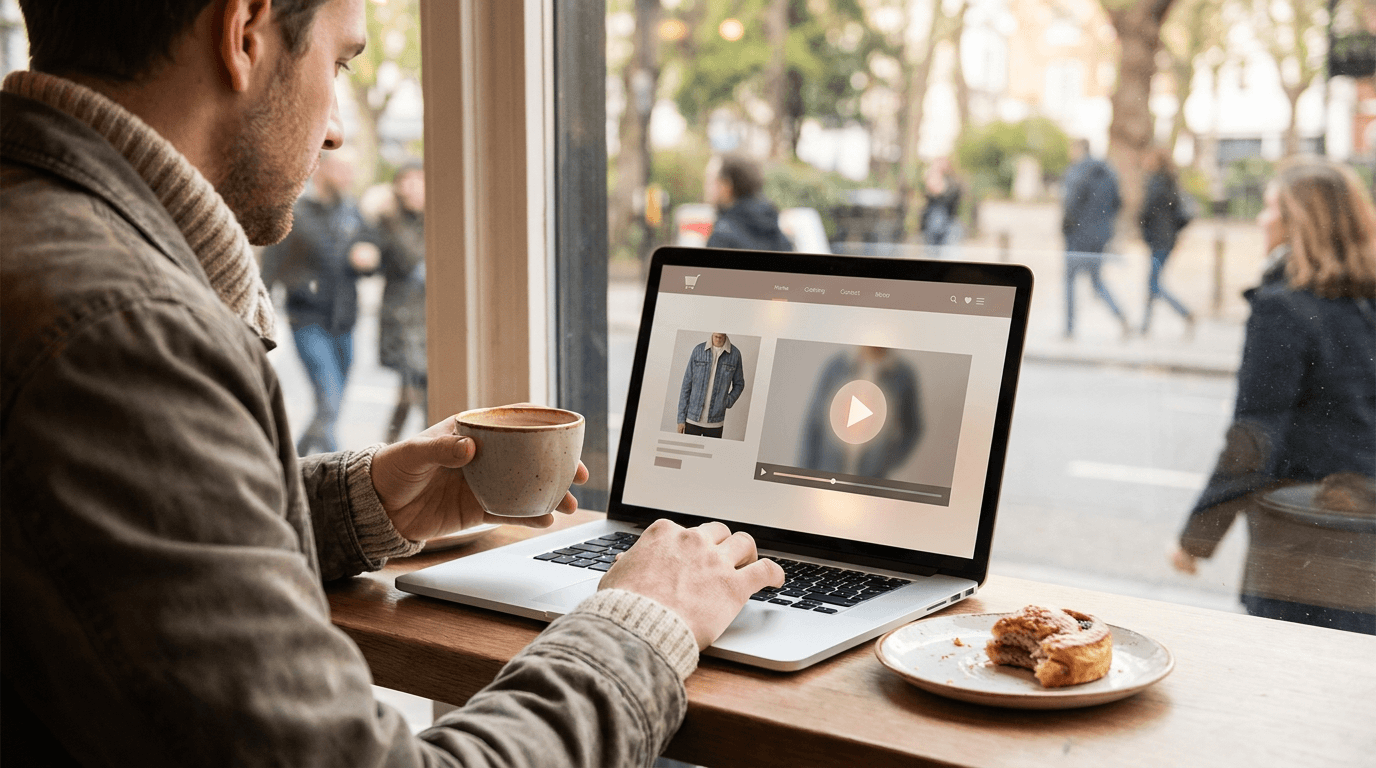
A product photo is a single frozen moment. It cannot show a hem swinging as someone walks, a sleeve pooling at the wrist, or a fabric that clings in a way the flat-lay shot never suggested. Fashion is one of the highest-return categories in ecommerce for exactly this reason: the gap between what a photo implies and what the garment does on a real body is where most avoidable returns start.
Does product video actually reduce fashion returns?
The direction of the evidence is consistent even where the exact figures vary by source. Analysis of ecommerce video content has cited return-rate reductions as high as a third when brands add video to a product listing that previously relied on photos alone, with the largest gains tied to video that shows real-world use rather than a static turntable shot.
Virtual try-on specifically shows a wider range in reported outcomes, roughly a quarter to nearly half depending on the retailer and category. That spread makes sense once you account for what the video is actually doing. A generic clip of a model wearing a garment is still more useful than a photo, but it is not personalized. A try-on video that shows the garment on the shopper's own body is answering a more specific question, and specific questions get more decisive answers.
Why product photos alone leave shoppers guessing
A single photo is a compressed guess at a lot of information a shopper actually needs before buying clothing.
- Drape and movement are invisible. A flat-lay or a single static pose cannot show how a fabric hangs once a person is standing, sitting, or walking in it.
- Fit at the edges is hidden. Sleeve length, hemline, and how a waistband sits are hard to judge from one angle, and product photos rarely show more than two.
- The model is not the shopper. A photo taken on a sample-size model tells a shopper very little about how the same garment will sit on a different build.
- Fabric behavior is easy to misread. Stretch, cling, and structure all look different in motion than they do in a still image, and a shopper has no way to tell which one they are looking at.
None of that is a photography problem. Better lighting or a sharper camera does not fix it, because the limitation is the format itself. This is the same underlying cause covered in fashion ecommerce return statistics: most avoidable returns trace back to a shopper guessing about fit and being wrong, not to a defective product.
Generic product video vs. seeing yourself in the garment
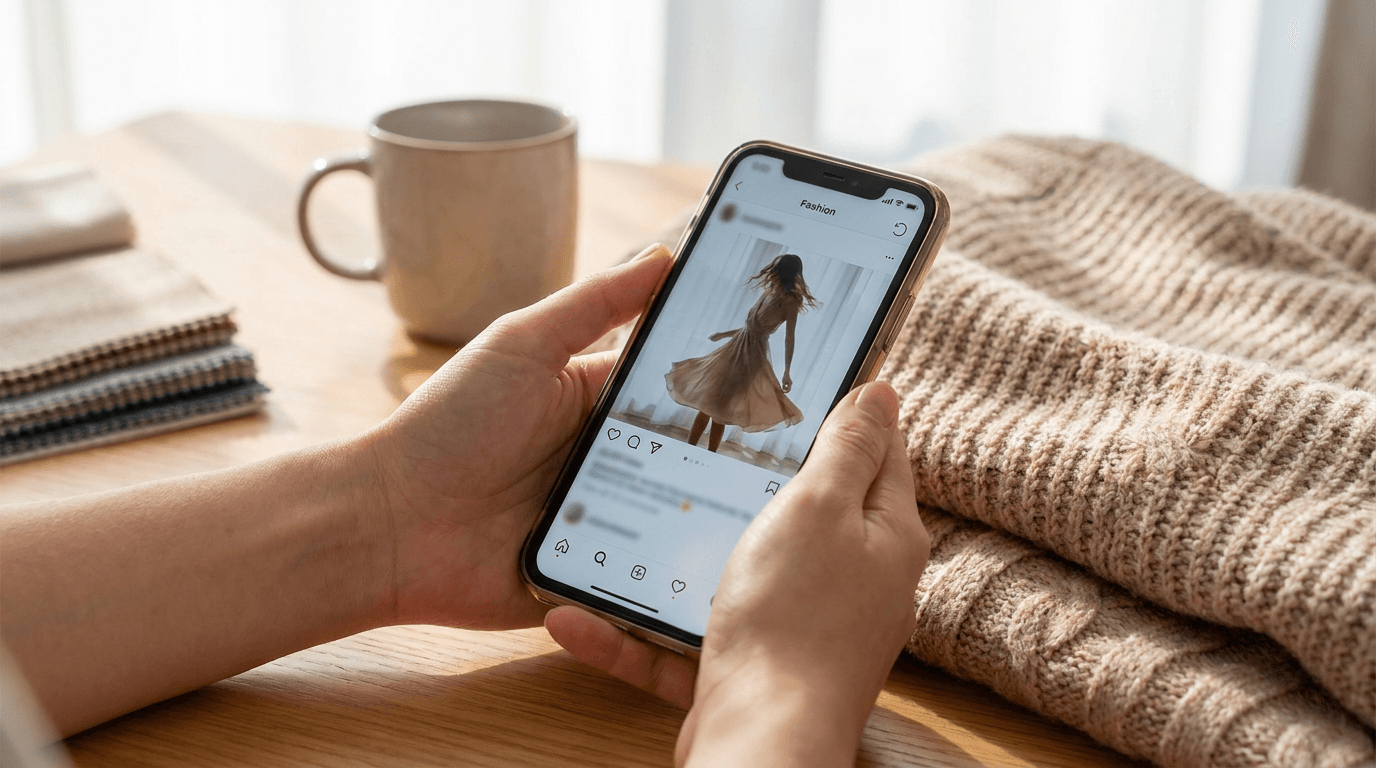
A runway-style product video, filmed once on a professional model and shown to every visitor, closes part of the gap a photo leaves open. It shows movement. It does not show fit on the shopper's own body, which is the part that actually drives returns.
Virtual try-on video is a different move entirely. Corlen's See It In Motion feature takes a shopper's already-generated try-on result, a still image showing them wearing the garment, and turns it into a short rotating clip. The shopper sees the garment move and drape on their own frame, not a stand-in model's. It is generated after a still result has already been created and shortlisted, since a video call to the underlying model costs more than a single image and is worth reserving for the items a shopper is seriously considering.
That distinction matters for where the return-reduction number lands. A generic video answers "what does this garment do." A personalized try-on video answers "what does this garment do on me," which is the actual question behind a fit-related return.
How to add try-on video to a fashion store
- Start with still virtual try-on. A shopper needs an accurate still result first: how virtual try-on works covers the mechanism, and it is the foundation any video feature builds on.
- Add motion as a second step, not the default. Offer video after a shopper has generated and shortlisted a result, so the more expensive generation runs only on items they are actually weighing.
- Keep the garment photos clean. A clear, well-lit product photo in the store's catalog produces a better still result and a better video, since the video is built from that same underlying image.
- Measure it against your own return data. Reported reductions vary by retailer and category. Compare return rates on items shoppers previewed with try-on video against items they did not, rather than assuming the industry-wide figures above apply exactly to one store.
Getting started
Fashion returns are expensive to process and, per the environmental impact of clothing returns, costly in ways that go beyond the balance sheet. Motion closes a real gap that static photos leave open, and personalized try-on video closes it further by answering the question a shopper actually has: how will this look on me. Try Corlen on your own photo to see a still result generated in seconds, or read the developer docs to add virtual try-on to your own store's product pages.
Frequently asked questions
Does adding product video actually lower a store's return rate?
Reporting on ecommerce video content has cited return-rate reductions as high as a third when a brand adds product video to a listing that previously had only static photos. The size of the drop depends on what the video actually shows. A model turning slowly on a runway helps a little. A video that shows drape, stretch, and how the fabric moves on a real body helps more.
Why do photos alone lead to more wrong-fit orders than video?
A photo freezes one angle, one pose, and one body. It cannot show whether a fabric clings, how a hem falls when someone walks, or whether a size runs long in the sleeve. Shoppers fill in those gaps with guesses, and a fashion item ordered on a guess is exactly the kind of order that comes back.
What is the difference between generic product video and virtual try-on video?
Generic product video shows the garment on a professional model, filmed once and reused for every visitor. Virtual try-on video, like Corlen's See It In Motion feature, generates a short rotating clip of the garment on the shopper's own photo, after their own try-on result. It answers a narrower, more useful question: not how does this look, but how does this look on me.
Is virtual try-on video expensive to add to a fashion store?
It costs more than a still image, since a video call to an AI model is a heavier job than a single image generation. That is why it is usually offered as an optional step after a shopper has already generated and shortlisted a still result, not something that runs on every product view.
Do I need a professional video shoot to get the return-reduction benefit?
No. A studio shoot is one way to get motion on a product page, but AI-generated try-on video works from a single garment photo already in a store's catalog. There is no reshoot required, and the video that gets generated is personalized to the shopper rather than shot once and shown to everyone.
Ready to add real try-on to your store?
Install Corlen on Shopify in minutes, or build it into your own platform with the developer API.
Similar posts
Virtual Try-On for Made-to-Measure and Custom Clothing Stores
Made-to-measure stores fix fit with tape measures, not try-on. See where a virtual try-on preview still helps a custom clothing shop, and where it does not.
Read articleGuidesVirtual Try-On for Streetwear Brands: Prints, Drops and Fit
Streetwear sells on graphics, oversized cuts and limited drops. See what a streetwear store should test in virtual try-on before relying on it for a release.
Read articleGuidesVirtual Try-On for Knitwear and Sweaters: What to Test First
Knitwear stretches, drapes and runs oversized, which makes fit hard to judge online. See where virtual try-on helps a sweater store and what to test before you rely on it.
Read articleSee it on your own photo
Corlen shows your customers how any garment looks on their own body, in seconds. Try it free, no account needed.
Try Corlen free