Virtual Try-On for Dropshipping Clothing Stores: Does It Pay Off?
Quick answer
A normal clothing store loses money on a return. A dropshipping store can lose money on a return and then lose a week arguing about whose fault it was.
Is virtual try-on worth it for a dropshipping clothing store?
For most clothing dropshippers, yes, as a test. Your margin per order is thin, so one avoided return does more for you than it would for a brand with a warehouse and a healthy markup.
The catch is that try-on only helps with one problem: shoppers not knowing how a garment will look and fit on them. If your returns come from late delivery or a product that does not match the listing, fix those first.
Why do returns hurt dropshippers more?
Dropshipping guides, such as the returns guide from TrueProfit, describe the same pattern. The item usually ships from a supplier abroad, so sending it back means international postage, a long wait, and in some cases a restocking fee. For a cheap garment, the label can cost more than the item.
- Return postage: often paid by you, and often a large share of the sale price.
- Supplier terms: many suppliers will not cover return shipping and some charge restocking.
- Time: a long loop means a refund request, a chargeback risk and a bad review before the parcel lands.
- Size is the usual cause: industry roundups commonly name sizing as the top reason for apparel returns.
Many dropshippers just refund and let the customer keep the item, since that is cheaper than the return label. That is a perfectly sensible rule, and it also means every size mistake is a full loss.
What does virtual try-on fix, and what does it not?
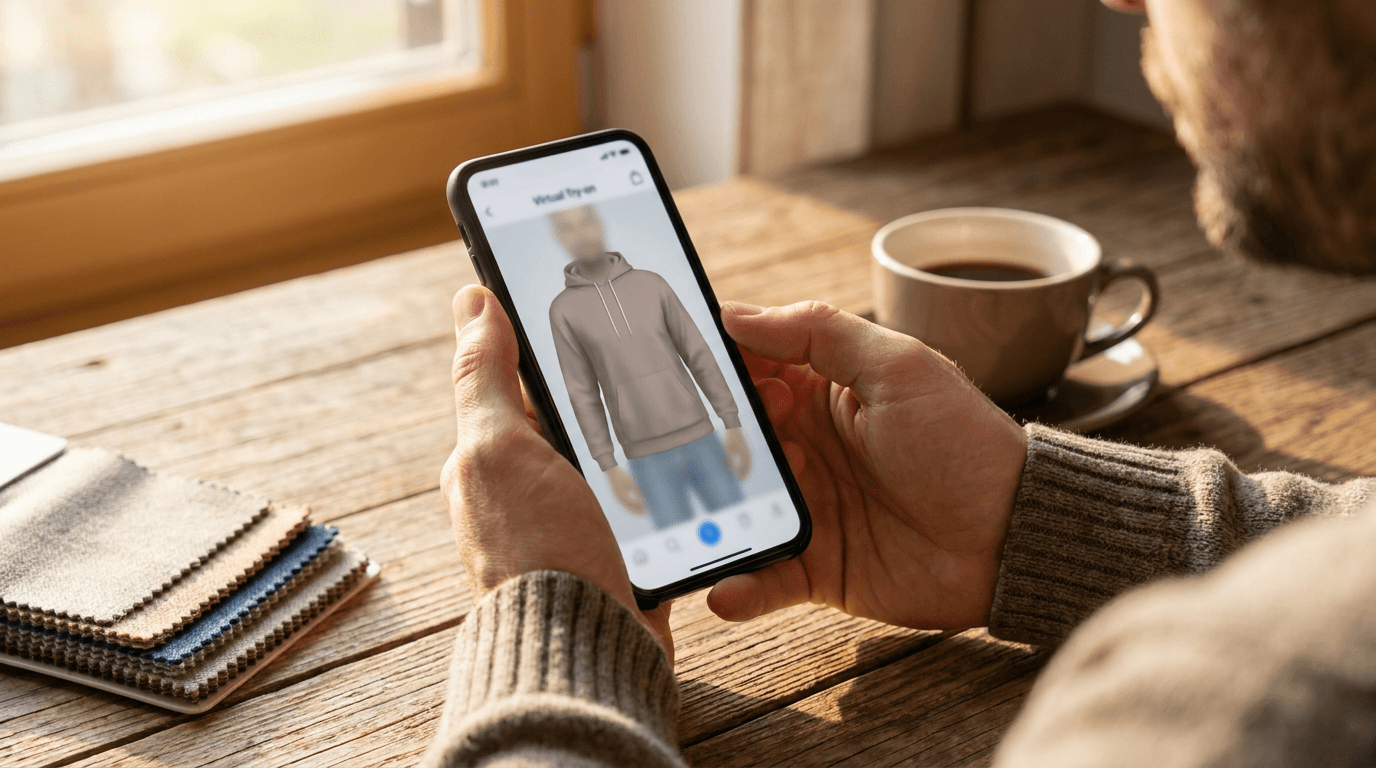
Try-on lets a shopper upload one photo and see the exact garment on themselves before paying. That helps with three buying doubts: will the cut suit me, will the color work on me, and how loose or snug will it sit.
It does not fix fabric that feels cheap, stitching that comes apart, or a supplier who ships the wrong color. A preview is a preview. If the real item is worse than the photo, no render will save you.
There is a second benefit that suits dropshipping specifically. Your supplier's photos are the same ones fifty other stores use. A shopper seeing the garment on their own photo is looking at something no competitor's page can show them.
Can you use supplier photos?
Usually, if you are allowed to use them. Check your supplier's terms, because some restrict how images may be used. The photo should show the whole garment clearly, ideally flat or on a plain background, with accurate color.
Run each product through the demo before you switch it on. Crowded, cropped or heavily filtered supplier images give weaker results, and our guide on photographing clothing for virtual try-on shows what renders best. If a supplier image fails, shoot the garment yourself when the sample arrives, or drop that product from try-on.
How do you add it without risking margin?
- Pull your return reasons from your Shopify orders and count how many mention size or fit.
- Pick your five best sellers with the most size returns, not your whole catalog.
- Test each product's supplier photo in the live demo with a few different photos of yourself.
- Add the try-on block to those product pages through the theme editor, using the Corlen Shopify app. It needs an Online Store 2.0 theme.
- Compare size returns and conversion on those products over a few weeks against before.
Corlen has no free plan or trial, so count the subscription as a cost in that comparison. Our guide on how to measure virtual try-on results walks through the numbers to track, and reducing size returns on Shopify covers the other fixes worth making alongside it.
On Shopify, shopper photos are processed to make the preview and are not saved. That is one less thing to explain in your privacy policy. When you are ready, try Corlen on your own photo and see what your customers would see.
Frequently asked questions
Does virtual try-on work for dropshipping stores?
Yes, if your supplier gives you a clear product photo. The try-on app only needs an image of the garment and a shopper's own photo, so it does not matter that you never hold the stock. It reduces size surprises, not supplier quality problems.
Why are returns so costly in clothing dropshipping?
The item often ships from overseas, so a return can mean paying international postage, waiting weeks, and sometimes eating a restocking fee. Dropshipping guides commonly say the return label can cost more than the product itself.
Can I use supplier photos for virtual try-on?
Usually, as long as you have the right to use them and they show the whole garment clearly on a plain background or a model. Check your supplier's terms. Blurry, cropped or heavily styled images give weaker results, so test each product before you turn the button on.
Will virtual try-on fix wrong item or poor quality complaints?
No. It helps shoppers judge fit and look before they buy. It cannot change fabric quality, stitching or a mixed up order, so you still need a supplier you trust and a clear return policy.
Ready to add real try-on to your store?
Install Corlen on Shopify in minutes, or build it into your own platform with the developer API.
Similar posts
Does Virtual Try-On Slow Down Your Shopify Store? How to Check
A try-on app adds a script to your product page. Here is what it can cost in speed, the limit Shopify sets for apps, and a simple before and after test.
Read articleGuidesHow to Reduce Size Returns on a Shopify Clothing Store: A 5 Step Fix
Wrong size is one of the most common reasons a clothing order comes back. Here is a step by step way to find your worst offenders in Shopify and fix them.
Read articleGuidesHow to Measure Virtual Try-On Results on Your Store
A store owner's guide to checking whether virtual try-on works: which four metrics to track, how to set a baseline, and how to read the results honestly.
Read articleSee it on your own photo
Corlen shows your customers how any garment looks on their own body, in seconds. Try it free, no account needed.
Try Corlen free