How to Find Your True Clothing Size Online, Without Guessing
Quick answer
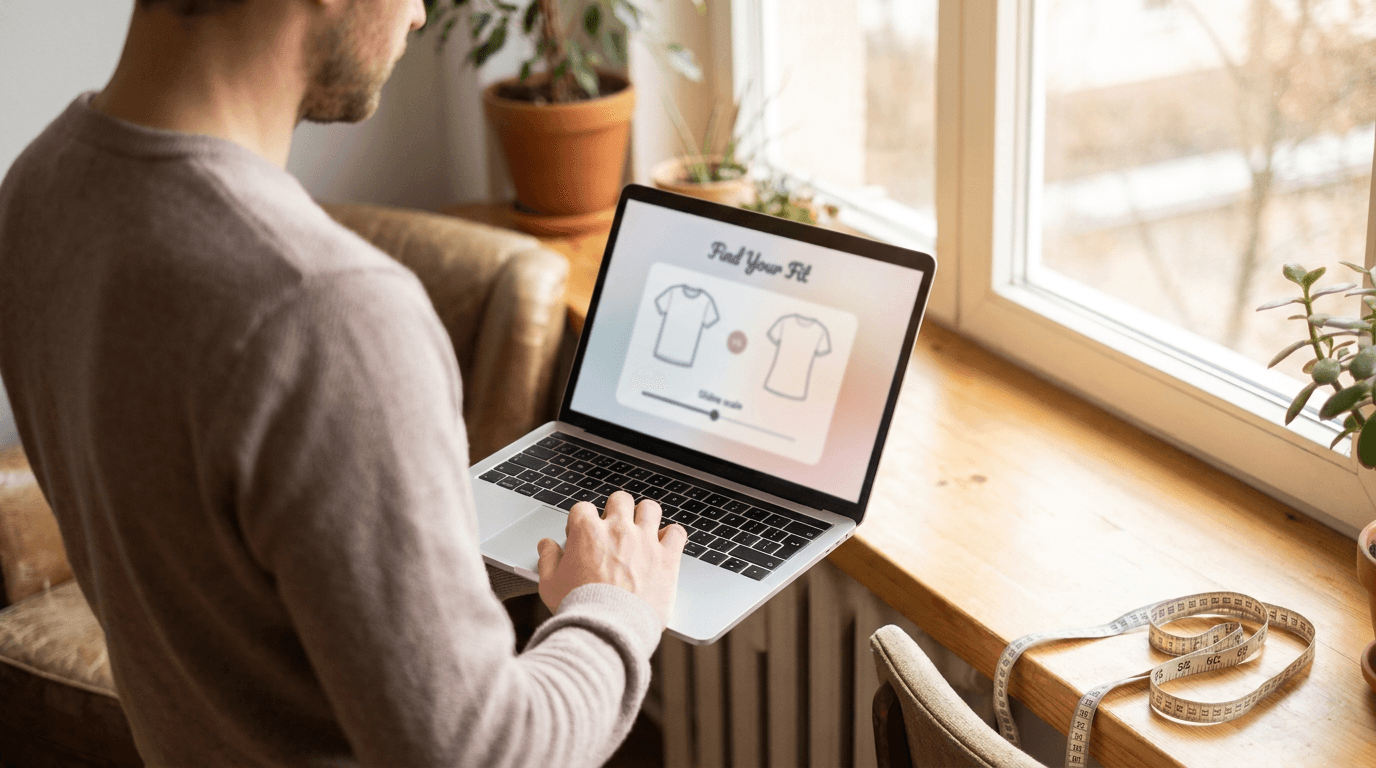
A 2025 survey by Rithum of more than 6,000 shoppers across the US, UK, Canada, France, and Germany found that 61 percent cited poor fit as a reason for returning apparel, ahead of every other reason in the report. Poor fit is the single biggest cause of clothing returns, and it happens because most people are still guessing their size instead of checking it.
How do you measure yourself for accurate online sizing
Start with a soft measuring tape, not a ruler, and measure over light clothing or underwear so bulky layers do not skew the numbers. Take each measurement twice and use the average.
- Bust or chest. Wrap the tape around the fullest part, keeping it level all the way around, not just at the front.
- Waist. Measure at your natural waistline, usually the narrowest point, not where your trousers happen to sit.
- Hips. Measure around the widest part, roughly 20 centimeters below your natural waist.
- Inseam. For trousers, measure from the crotch seam to the bottom of the leg on a pair that already fits well, rather than guessing.
Write these numbers down somewhere you can find them again. Body measurements do not change often, but you will need to check them against a new chart every time you shop at a store you have not bought from before.
Why does the same size fit differently at every store
Clothing sizing is not standardized. Each brand builds its chart around its own fit model, its own target customer, and its own manufacturing conventions. A size 12 dress at one retailer can match a size 8 or a size 16 somewhere else, and a medium t-shirt can run a full size looser or tighter depending on the label sewn into it.
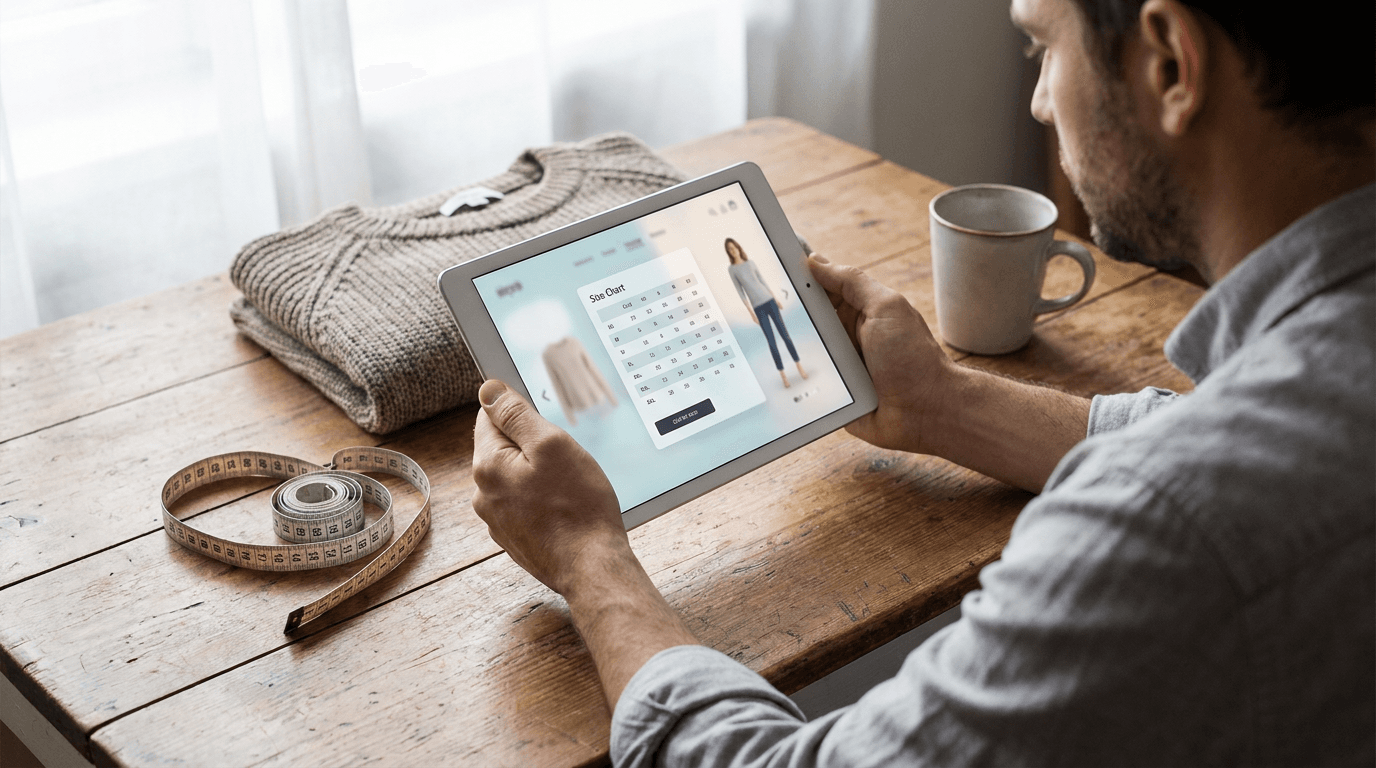
This is why the size you normally wear is a weak starting point on an unfamiliar site. The number that matters is the brand's own size chart, cross-checked against your own measurements from the section above, every single time. A five-minute check against a new chart is cheaper than a return shipment.
Do reviews and model photos actually help
Used correctly, yes. Most product listings show the model's height and the size they are wearing, which gives you a concrete point of comparison if you know your own height. Customer reviews add a second layer: a cluster of comments saying a jacket runs small, or that the sleeves come up short, reflects what actual buyers experienced, not marketing copy written before the product shipped.
Neither one replaces your own measurements. A model who is 175 centimeters tall wearing a size small tells you something useful only once you know your own numbers to compare it against. Use reviews and model details to narrow a decision between two sizes, not to skip measuring altogether.
What do you do when the size chart still is not enough
Even a careful measurement and a correct size chart still leave a gap. A chart tells you the garment's dimensions. It does not tell you how the fabric drapes on your specific build, whether a cropped jacket will actually sit at your natural waist, or whether a size that fits your chest will pull tight across your shoulders. That gap is exactly where most of the returns in the Rithum survey come from: shoppers who followed the chart correctly and still got a fit that looked wrong once the item arrived.
A number on a chart cannot show you drape, proportion, or how a garment sits on a body shaped differently from the brand's fit model. That gap exists no matter how carefully a shopper measures.
How virtual try-on removes the remaining guesswork
Virtual try-on closes that gap by showing you the garment on your own photo instead of a generic model. A properly built system does more than paste the item over your picture. It renders the size you selected with the actual drape, sleeve length, and hem that size would produce on your own build, so a large looks visibly looser than a medium on the same photo instead of the same smooth fit relabeled.
Corlen builds virtual try-on this way for Shopify stores, an in-store kiosk, and a direct API for developers. Selecting a different size regenerates the result against your own photo, so you can compare a medium and a large side by side before you decide, the same comparison a fitting room gives you, without leaving your browser. For more on what makes a result trustworthy in the first place, see is virtual try-on accurate. For the business case behind fewer wrong-size orders, see how to reduce online fashion returns. For a deeper look at how measurement tools and visual try-on complement each other, see body measurement vs virtual try-on.
The fastest way to see this for yourself is to try it. Try Corlen free on your own photo and compare two sizes on the same garment before you decide which one to order.
Frequently asked questions
What is the most reliable way to find my size when shopping online?
Measure your own body (bust or chest, waist, hips, and inseam for pants) and compare those numbers against the specific brand's own size chart, not a generic one and not the size you normally wear elsewhere. Brands set their own charts from their own fit models, so the same tape measure numbers can land on a different letter or number at every store.
Why does a medium fit differently at two different stores?
There is no single sizing standard that clothing brands are required to follow. Each brand builds its size chart around its own fit model and its own target customer, so a medium at one label can match a small or a large somewhere else. Treat every brand's chart as its own system.
Do model photos and customer reviews actually help with sizing?
Yes, as one more data point. A model's listed height and the size they are wearing gives you a concrete reference, and reviews that mention runs small or runs large reflect actual buyers, not the brand's own marketing copy. Neither replaces measuring yourself, but both narrow down the guess.
Can virtual try-on tell me my exact size?
It will not replace a tape measure, but a size-aware virtual try-on shows how a specific size actually drapes on your own photo instead of a generic model, so you can see whether a large looks properly fitted or noticeably loose on your own frame before you order it.
Is it safe to upload my photo to a virtual try-on tool just to check sizing?
On Corlen, yes. Kiosk photos are deleted automatically within two hours of the session, sooner if you tap delete, and photos submitted through the public demo are never written to storage at all. They exist only long enough to generate your result.
Ready to add real try-on to your store?
Install Corlen on Shopify in minutes, or build it into your own platform with the developer API.
Similar posts
Virtual Fitting Room Software: What It Is and How to Choose One
Virtual fitting room software covers AR overlays, 3D body scanning, and AI photo try-on. Here is what each actually does and how to pick the right one.
Read articleGuidesVirtual Try-On for Big and Tall Clothing: Solving Two Fit Problems at Once
Big and tall sizing has to solve girth and length at the same time, and a size chart alone rarely does both. Here is what a fit preview needs to get right.
Read articleGuidesVirtual Try-On for Halloween Costumes: Why Costume Sizing Is Its Own Problem
Costume sizing rarely matches everyday clothing charts, and a bad fit often arrives too close to the date to fix. Here is how a fit preview helps.
Read articleSee it on your own photo
Corlen shows your customers how any garment looks on their own body, in seconds. Try it free, no account needed.
Try Corlen free